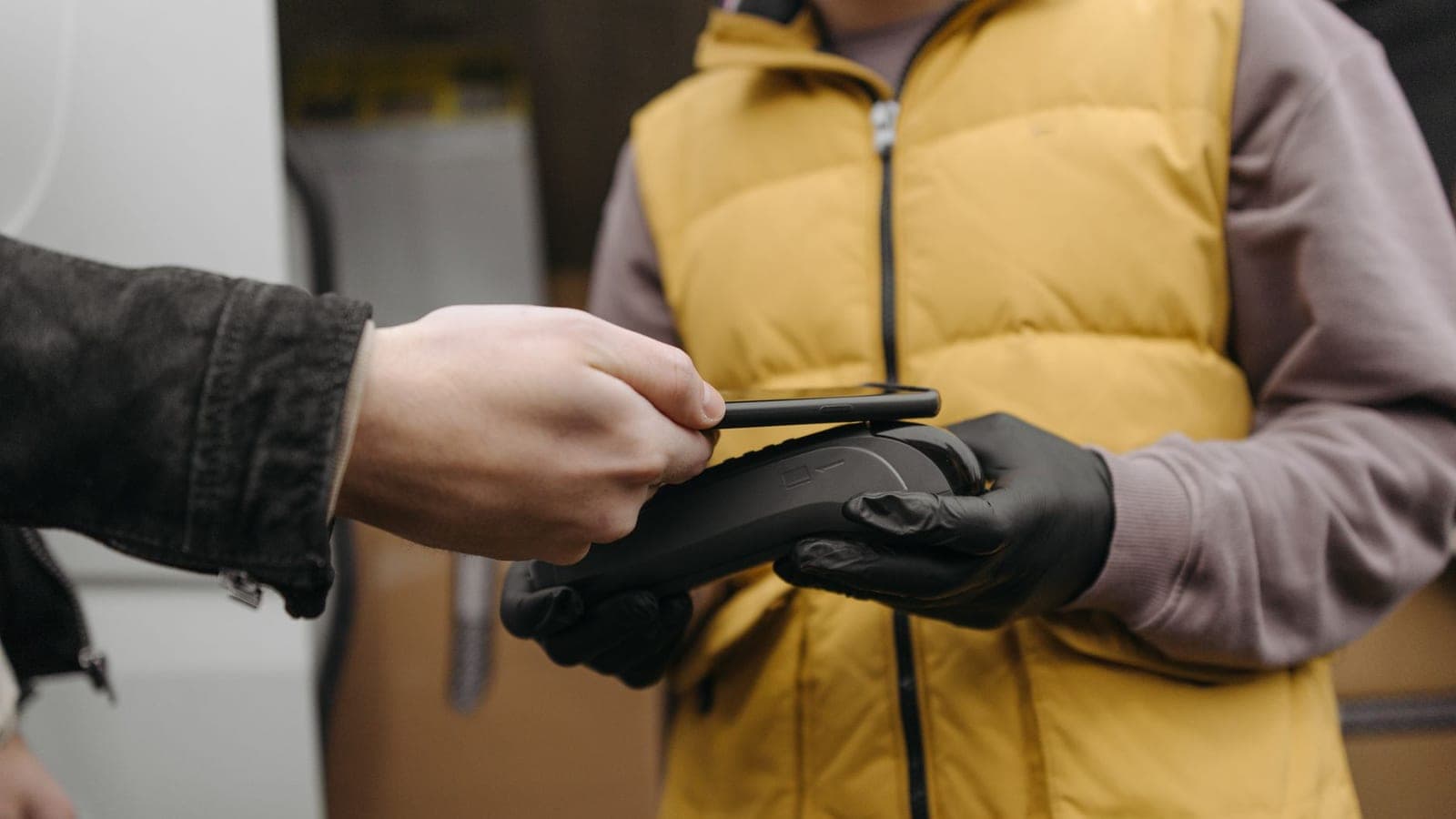
Choosing between NFC wristbands and QR codes is one of the most important technology decisions for any event. Both options have their advantages and drawbacks, and the right choice depends on the type of event, your budget and the experience you want to offer. This guide helps you make the right call, covering the technical standards behind each technology and the legal obligations that appear once the wristband stops being just a ticket.
How does each technology work?
Although both are used to identify and validate attendees, they work in very different ways.
- QR: a visual code scanned with the camera on a smartphone or a dedicated reader. Find out how to spot fake tickets with each technology
- NFC: a chip activated by proximity (contactless) with a specific reader, based on the ISO 14443 standard
- QR can live on the attendee's phone, be printed, or sit on a wristband
- NFC requires a physical medium: a wristband, card or sticker
Both have a published international standard, and reading it saves arguments with suppliers. Part 2 of ISO/IEC 14443, published in its 4.0 edition on 22 July 2020 under the title "Cards and security devices for personal identification — Contactless proximity objects — Part 2: Radio frequency power and signal interface", specifies "the characteristics of the fields to be provided for power and bi-directional communication between proximity coupling devices (PCDs) and proximity cards or objects (PICCs)". In short: the reader powers the chip through its own field. The wristband carries no battery, which is why an NFC wristband never runs out of charge halfway through a festival.
QR is also standardised. ISO/IEC 18004, in its 2015 edition, "defines the requirements for the symbology known as QR Code" and includes the encoding methods, symbol formats, error-correction rules and the reference decoding algorithm; the 2024 edition replaces it with the same scope. The fact that error correction is defined in the standard explains why a slightly crumpled or partly obscured code still reads, and why the practical limit isn't the paper but the camera and the lighting.
| Technology | Standard | Band | Power source |
|---|---|---|---|
| NFC / proximity card | ISO/IEC 14443-2:2020 | 13.56 MHz | Reader's field |
| RFID UHF | ISO/IEC 18000-63:2021 | 860-960 MHz | Passive backscatter |
| QR code | ISO/IEC 18004:2024 | Not applicable | Screen or paper |
NFC wristband or UHF wristband? They're not the same thing
It's the most expensive confusion in the industry: two "RFID" wristbands can work at different frequencies and serve entirely different purposes. NFC is pure proximity at 13.56 MHz. The other family is UHF, standardised in ISO/IEC 18000-63:2021, edition 3.0 published on 17 November 2021, which defines the air-interface parameters between 860 and 960 MHz for "passive-backscatter, Interrogator-Talks-First (ITF)" systems and includes the collision-arbitration scheme "used to identify a specific tag in a multiple-tag environment".
In Europe, what can be transmitted in that band is set by a harmonised standard. ETSI EN 302 208 V3.4.1, from December 2023, specifies the technical characteristics of RFID equipment "used in the frequency band 865 MHz to 868 MHz and 915 MHz to 921 MHz", with "power limits up to a maximum of 2 W e.r.p. (…) in the frequency band 865 MHz to 868 MHz and up to a maximum of 4 W e.r.p. in the frequency band 915 MHz to 921 MHz". The document itself notes that use of the 865 to 868 MHz band is harmonised across the European Union by Decision (EU) 2017/1483, and that the 915 to 921 MHz band has "a limited implementation status" within the Union and in CEPT countries.
There are three operational consequences, and none of them is theoretical. First: a UHF wristband can be read from metres away, and several at once, which makes it suitable for zone counting and fast-moving corridors, whereas NFC requires bringing the wrist right up to the reader. Second: that same range is a risk, because a poorly angled reader can validate someone standing behind the person in the queue. Third: the hardware isn't interchangeable. An NFC reader can't read UHF tags, nor the other way round. Before comparing quotes, ask the supplier for the specific standard and band, not just the word "RFID".
Which is faster to validate, NFC or QR?
Speed matters when thousands of people are entering in a short window. Here NFC has a clear edge.
- NFC: validated on the spot with the Futura Tickets app
- QR: validated on the spot with the Futura Tickets app, depending on code quality and ambient light
- NFC performs the same in any lighting condition
- QR can struggle with damaged screens or low brightness
It's worth putting those numbers in context. None of the standards cited sets a transaction time: ISO/IEC 14443-2 describes fields and signals, not seconds. The figures above are operational estimates from this guide, not lab measurements, and the one hard data point we can offer is our own product's: the Futura Tickets app validates a QR code and an NFC wristband on the spot.
The bottleneck is almost never the chip. It's the person searching for the email on their phone, the badly signposted lane, and the network coverage. That's why two questions matter more than the technology itself: does the validator work without network access — and sync afterwards — and how many entries per minute can each lane sustain at peak time. A system that validates in 300 milliseconds but needs 4G at a packed venue performs worse than a slower one running offline. It's the same sizing logic covered in the guide on access control at festivals.
How much does it cost to implement NFC versus QR?
Total cost includes hardware, software, consumables and operations. Here QR has the edge.
- QR: smartphones as readers, no wristband cost (£0.5-2 if printed)
- NFC: dedicated readers (£50-200 each) + wristbands (£1-3 per unit)
- QR: scalable with no extra hardware investment
- NFC: requires planning the exact wristband quantity in advance
Those ranges come from supplier quotes rather than public price lists: treat them as an order of magnitude and request a firm quote. What usually doesn't show up in the comparison are the line items around the physical medium: encoding the wristbands before the event, transport and custody, backup stock for breakages and losses, staff at the exchange point and, if there's a balance, managing refunds after the festival. For a one-day event, those items can outweigh the cost of the readers themselves.
| Item | QR | NFC or UHF wristband |
|---|---|---|
| Reader | Staff's smartphone | Dedicated device per lane |
| Consumable | Optional printing | One unit per attendee |
| Pre-event prep | Code generation | Encoding and logistics |
| On-site restocking | Resending the code | Physical stock and staff |
| Post-event closure | None | Balance refund if cashless |
What extra features do NFC wristbands offer?
NFC wristbands offer possibilities that go well beyond access validation.
- Cashless payments: attendees top up funds and pay by tapping the wristband
- Zone control: access to VIP or backstage areas with differentiated access control
- Interactions: brand activations, voting, gamification
- A physical keepsake: many attendees keep the wristband as a souvenir
The underlying difference is that the wristband is a persistent identifier throughout the event, while a QR code is usually a single-use ticket. That lets you accumulate spending, permissions and access rights on the same medium, which is exactly what turns a technical decision into a legal one: as soon as the wristband holds a balance, the project stops being just ticketing.
What legal obligations does a balance-carrying wristband add?
Those of e-money, and they're worth checking before you sign. Spain's Ley 21/2011, de 26 de julio, de dinero electrónico defines e-money in its Article 1 as "todo valor monetario almacenado por medios electrónicos o magnéticos que represente un crédito sobre el emisor" (any monetary value stored electronically or magnetically that represents a claim on the issuer), issued on receipt of funds and accepted by persons other than the issuer. Its Article 2 reserves professional issuance to authorised entities: credit institutions, e-money institutions and little else.
There's a door left open for closed venues. Real Decreto-ley 19/2018, de 23 de noviembre, de servicios de pago excludes from its scope, in Article 4.k).1º, instruments that "permiten al titular adquirir bienes o servicios únicamente en los locales del emisor o dentro de una red limitada" (allow the holder to acquire goods or services only on the issuer's premises or within a limited network). A cashless system that only works at the festival's bars fits that description, but the exclusion isn't automatic or unlimited: Article 6 requires notifying the Bank of Spain when payment transactions carried out under those exclusions exceed one million euros in the preceding twelve months, with a description of the service and a reference to the applicable exclusion, and the supervisor issues a reasoned decision.
There's one obligation left that hits the event's cash flow directly: Article 17 of Ley 21/2011 requires the issuer to reimburse the holder, on request, "en todo momento y por su valor nominal" (at any time and at its nominal value). Unspent balance isn't revenue for the organiser. Anyone running cashless needs a refund window, a procedure and a cash forecast; the operational details are in the guide on cashless and digital wallets at events. This is a reading of the cited texts, not a legal opinion: the specific fit for each setup needs to be confirmed by an advisor with the contract in hand.
Is a ticket that only exists as a QR code on a phone accessible?
It's a new question, and there's a standard behind it. Spain's Ley 11/2023, de 8 de mayo, transposes Directive (EU) 2019/882 and expressly includes e-commerce services among those that must meet accessibility requirements, applicable from 28 June 2025. Those requirements include that the identification methods, electronic signature methods and payment services used in the purchase be perceivable, operable, understandable and robust.
The practical reading for ticketing is twofold. If the only way to get in is a QR code inside an app, you're pushing a device requirement onto the attendee; it's worth keeping a printed alternative or emailed copy available. And if the wristband is the medium, the critical point shifts to the exchange desk: queues, counter heights and reading the balance. It's the same approach we described for the German market in the guide on accessible ticket sales and the BFSG, with the difference that here the applicable law is Spanish.
What data does each technology leave behind?
More than you'd think, and different in each case. A UHF tag compliant with ISO/IEC 18000-63 responds with unique identifiers, and in a venue with readers across several zones, that produces a trail of zone-and-time passes tied to a specific wristband. A QR code on a phone leaves less of an environmental trail, but it lives in the attendee's camera roll and can be forwarded by messaging app with a single gesture, which is exactly the fraud vector behind screenshots.
That leads to three design decisions. First: what gets written onto the medium, since a wristband only needs a bare identifier with no personal data, and everything else can stay in the system. Second: how long the zone-pass data is kept, which is a question of retention period, not disk capacity. Third: what gets handed over to the sponsor, because a list of individual journeys is a different thing from an aggregate. The applicable rules and deadlines are in the GDPR guide for organisers and in the breakdown of responsibilities over ticket buyer data.
When should you choose QR and when NFC?
There's no universal answer. The right choice depends on your specific context.
- Choose QR if: budget is tight, it's a one-off event, your audience is tech-savvy, and you don't need cashless
- Choose NFC if: it's a multi-day festival, you want cashless, or fast entry speed is critical
- Hybrid model: QR for general admission, NFC for premium zones or cashless
The hybrid model tends to age best, and not for technical elegance: it lets you sell and deliver tickets digitally with no logistics, while reserving the physical medium for those who genuinely need it — multi-day pass holders, production accreditation, zones with spending. It also spreads the risk: if the wristband exchange breaks down, the general entrance keeps running on phones.
What we couldn't verify
Two things, and we'd rather say so. The first is pricing: the ranges for readers and wristbands in this guide come from supplier quotes rather than public price lists, so we haven't been able to check them against a citable source, and they may have shifted. The second is the half-second NFC validation figure: none of the technical standards sets a transaction time, and we haven't found a published independent measurement for events, so that number remains an operational estimate.
Checklist before signing with a supplier
Seven questions worth putting in writing before placing an order.
What standard and band do the wristbands use? ISO/IEC 14443 at 13.56 MHz and ISO/IEC 18000-63 between 860 and 960 MHz aren't interchangeable, and neither are the readers.
Does the validator work without network access? Ask about offline behaviour and how it syncs once coverage returns.
How many entries per minute can a lane sustain? With the actual hardware on offer, at peak time, not in a demo.
Who owns the tags and the data? Ask whether the wristbands are locked into the supplier's platform, and what happens if you switch systems next year.
If there's a balance, who issues the e-money? If the answer is "we do", ask to see how it fits with Ley 21/2011 and Article 4.k) of Real Decreto-ley 19/2018.
How is unspent balance refunded? Article 17 of Ley 21/2011 requires reimbursement at nominal value; set the timeframe, channel and fees before you open sales.
Is there an alternative to the ticket on the phone? It's an accessibility requirement from 28 June 2025, and also your fallback when coverage drops.
Conclusion
There's no universally better technology. QR is more flexible and economical, ideal for starting out or for events with a limited budget. NFC offers more speed and premium features, but requires greater investment and planning. To see where these technologies are heading, check out the ticketing trends for 2026 — many organisers start with QR and move to NFC once volume and needs justify it. The decision gets easier once you split it into three questions: which standard and band you need, how much the physical medium's logistics will cost, and what legal obligations a balance adds.
Sources
- ISO/IEC 14443-2:2020, Contactless proximity objects — Radio frequency power and signal interface (IEC Webstore)
- ISO/IEC 14443, standard profile for proximity cards (ISO)
- ISO/IEC 18000-63:2021, air-interface parameters from 860 MHz to 960 MHz, Type C (IEC Webstore)
- ISO/IEC 18004:2015, QR Code symbology specification (IEC Webstore)
- ISO/IEC 18004:2024, current edition of the QR Code symbology (ISO)
- ETSI EN 302 208 V3.4.1 (2023-12), harmonised RFID standard for 865-868 MHz and 915-921 MHz (ETSI, PDF)
- Ley 21/2011, de 26 de julio, de dinero electrónico, consolidated text (BOE)
- Real Decreto-ley 19/2018, de 23 de noviembre, de servicios de pago, consolidated text (BOE)
- Ley 11/2023, de 8 de mayo, accessibility of certain products and services, consolidated text (BOE)