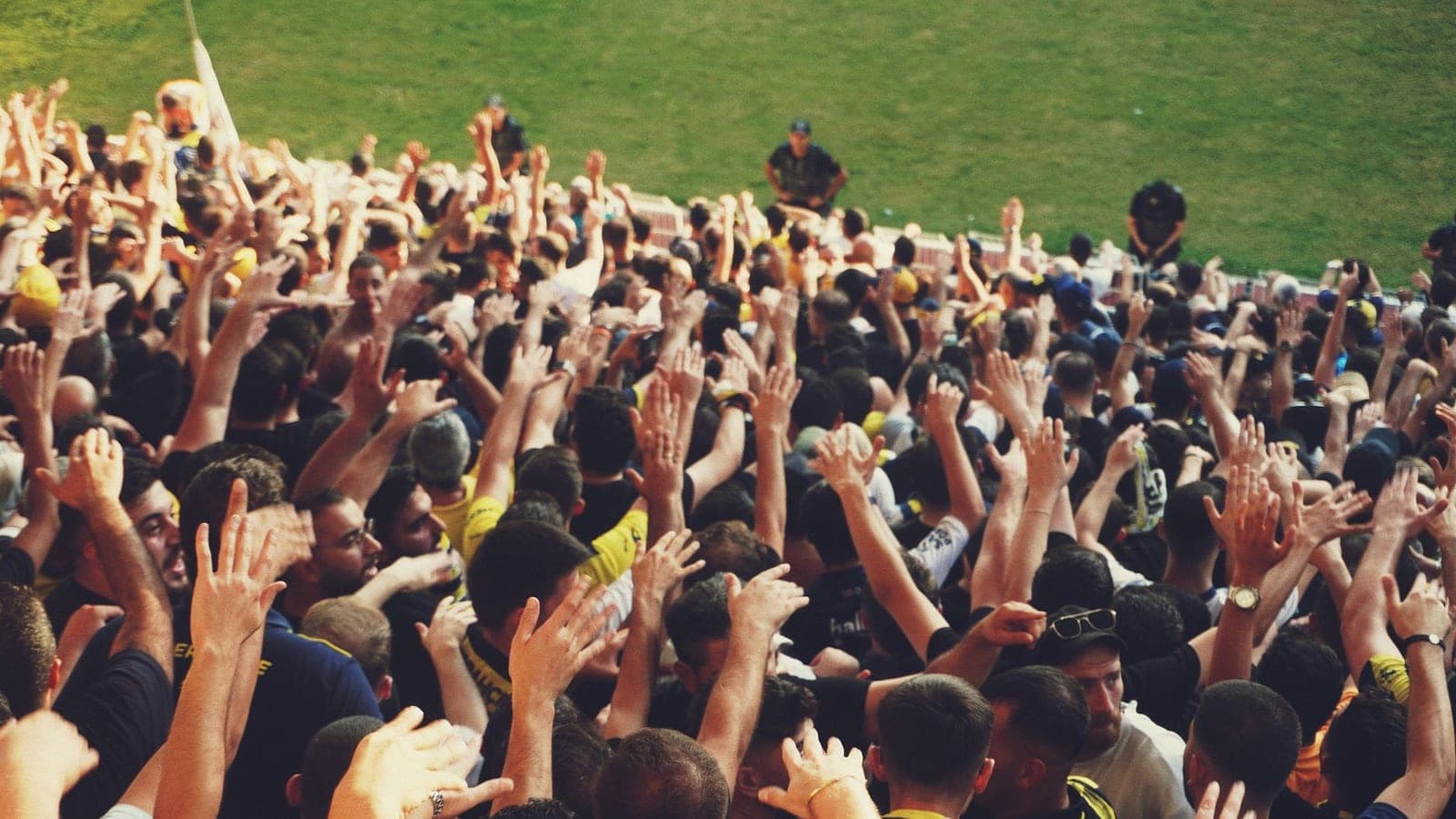
Sports clubs have a problem that no other type of event organizer faces: their "customers" don't feel like customers. They are members, fans, supporters. They have an emotional relationship with the club that spans decades and shapes absolutely everything: how they buy, what they expect, what they tolerate and what they won't forgive. A ticketing system that treats a Betis member the same way it treats a music festival attendee is going to fail.
And the problem multiplies because a sports club doesn't organize one event a year. It organizes 20, 30 or 50 matches per season, plus special events, plus youth camps, plus galas. Each one with different rules: league matches with season-ticket holders who already have their seat, Cup matches with open sales, high-risk matches with restrictions for visiting fans, and preseason friendlies with special prices. All of this with a member roster that changes every month and a stand with thousands of numbered seats.
This guide covers the real ticketing needs of clubs and sports events in Spain: from season-ticket management to corporate boxes, including controlled resale and digital membership cards.
Why are season tickets the most complex product in sports ticketing?
A season ticket is not a single ticket. It's an annual contract between the member and the club that includes a reserved seat for every home league match, priority purchasing for other competitions, and often store discounts, access to special events and other benefits.
Renewal and new sign-ups
The season-ticket campaign is the most important commercial moment of the year for any club. It usually opens in June or July, and the process has several phases: first, current members renew (keeping their seat), then new sign-ups open for the seats that are freed up, and finally there may be a waiting list.
Your ticketing system must manage this entire flow: send personalized communications to each member with their price (which can vary by seniority, age or zone), process online payment or bank direct debit, and update the seating map in real time as seats are renewed or released.
A key data point: in clubs with high demand, the renewal rate exceeds 90%. That means the seating map barely changes from one season to the next. But the 10% who don't renew trigger chain reactions: members on the waiting list move up, seats are changed, zones are reconfigured.
Pricing by category and profile
Sports season tickets have a far more complex pricing structure than any other type of ticket. The price depends on the zone (main grandstand, side, end stand, preferred), the member's profile (adult, retiree, under-25 youth, child), seniority (some clubs apply progressive discounts based on years as a member), and sometimes on whether it's a new sign-up or a renewal.
A Segunda División club may have 6 zones with 4 pricing profiles each: 24 different price combinations. A Primera club with a more segmented stand can reach 50 or more. Your platform has to support this matrix without driving the administrator crazy configuring it.
Digital pass vs physical card
The trend is clear: the digital pass is replacing the plastic card. But the transition isn't instant. Many members—especially older ones—prefer their physical card, and the club can't force them to switch without losing members.
The practical solution is to offer both formats: a digital membership card on the phone (Apple or Google Wallet) for those who want it, and a physical NFC card for those who prefer it. Both must work the same way at the turnstiles and grant access to the same services.
How do single-match sales fill the stand beyond season-ticket holders?
Season-ticket holders occupy a fixed percentage of the stand. The rest is sold match by match, and this is where the club can maximize revenue if it has the right tools.
Variable pricing per match
Not every match is worth the same. A local derby fills the stadium at any price. A Tuesday night against the bottom-of-the-table side needs incentives. Variable pricing—adjusting ticket prices according to expected demand, the opponent and the kickoff time—is standard in leagues like the NBA or the Premier League, and is starting to take hold in Spain.
Your platform must allow different prices to be set per match without having to create a new event each time. The ideal approach is to have a base price per zone and apply multipliers by match category (A, B, C) that are defined once the schedule is known.
Purchase priority for members
Non-season-ticket members and season-ticket holders who want extra tickets (to invite someone, to bring a family member) expect to have priority over general sales. This is implemented with purchase windows: first season-ticket holders, then members, then open sales. Each phase with its own price, which may differ.
Away tickets
Managing tickets for visiting fans has its own requirements. In high-risk matches, the police and the league require the personal details of all visiting buyers. Sales may be restricted to members of the visiting club, with strict quotas and deadlines. Your system must support delegated sales: the visiting club receives a quota of tickets and manages the sale among its own members, reporting the data to the home club.
Family packs and groups
Family packs (2 adults + 2 children at a discount, with guaranteed adjacent seats) are a fundamental acquisition tool for clubs that want to rejuvenate their stands. The same goes for packs for supporters' clubs or organized groups, who need blocks of seats together and may have special prices.
Why is the seating map the centerpiece of sports ticketing?
At a concert you can have a standing pit and that's it. In a stadium, every seat has a number, a row, a section, a zone and a price. And season-ticket holders have historic rights to "their" seat that you cannot ignore.
Interactive maps with real-time availability
The buyer must be able to see the stadium, zoom into a zone, see which seats are free (in green), which belong to season-ticket holders (blocked), and visually select where they want to sit. This seems basic, but many ticketing platforms don't do it well for large stadiums: loading a map of 25,000 seats with real-time availability requires performance.
Blocks and holds
Beyond season-ticket holders, there are seats that get blocked for other reasons: restricted visibility (columns), seats reserved for authorities, complimentary seats for sponsors, protocol seats. Your system needs different block types that don't get confused with one another.
Seat changes
Members request seat changes more often than you'd think: they want to be closer to a friend, further from the sun, in a zone with a better atmosphere. If every seat change requires manual intervention from the administrator, you're generating an unnecessary workload. A system that lets the member request a change (subject to availability and approval) reduces the operational burden.
Member management: beyond the ticket
A sports club doesn't sell tickets: it manages a community of members. Ticketing is only one part of that management, but it must be integrated with the rest.
Member roster
The member roster is the most important database the club has. It includes personal details, seniority, season-ticket history, payments, incidents and communications. Your ticketing platform must integrate with this roster or, ideally, manage it directly. If the roster is in one system and ticketing in another, the data isn't cross-referenced and you lose personalization capability.
Dues and recurring payments
Members pay a monthly or annual fee that is independent of the season ticket. Some clubs include the fee in the season ticket; others keep them separate. Either way, you need to manage recurring payments, bank direct debits, returned receipts and defaulters. Does a member who doesn't pay their dues lose access to the stadium? Do they lose purchase priority? The club defines the rules, but the platform must be able to implement them.
Loyalty and points programs
Attendance points programs are increasingly common: the member accumulates points for every match they attend (recorded via the wristband or membership card at the turnstile), and those points give them priority to buy tickets for special matches, store discounts or access to exclusive experiences.
Digital membership card
The digital membership card integrated into Apple Wallet or Google Wallet works as a universal identifier: stadium access, member identification in the store, points accumulation, and potentially cashless payment. It's the natural step for clubs that want to digitize their relationship with members without forcing them to download a proprietary app.
Premium zones, boxes and corporate hospitality
Premium zones and boxes represent between 10% and 25% of ticketing revenue at Primera División clubs, with much higher margins than regular tickets.
Corporate boxes
A box is sold by season to a company. It includes a fixed number of seats, access to a hospitality area, catering and often parking. The management is particular: the holding company designates the attendees match by match, and those names must be communicated to the club in advance.
Your platform needs a box management flow: the company accesses a panel where it enters the names of the guests for each match, invitations are generated automatically, and access control recognizes them on arrival. If this process is manual (an email to the club's commercial department), it consumes hours of work per match.
VIP and preferred zone
VIP zones with catering and service have prices 3-5 times higher than regular tickets. They can be sold per match or as a premium season-ticket format. They need a differentiated purchase process—selling a €20 ticket is not the same as selling a €200 experience—and they often include services that must be coordinated: parking reservation, catering confirmation, access through an exclusive gate.
Non-sporting events at the stadium
Stadiums generate revenue by renting out the space for concerts, corporate events and other uses. The ticketing system must be able to configure the same venue with completely different layouts: for a concert, the stands stay the same but the pitch has a standing area and a stage; for a corporate event, only part of the stadium may be used.
How can clubs control resale for season-ticket holders?
Season-ticket holders who can't attend a match want to transfer or resell their ticket. If the club doesn't offer an official channel for this, resale moves to uncontrolled channels: WhatsApp groups, Wallapop, illegal resale around the stadium.
Official resale marketplace
An internal marketplace where the season-ticket holder lists their ticket for sale (at a fixed price set by the club or with a limited margin) and another member or the general public buys it. The club takes a commission, the season-ticket holder recovers part of the money, and the ticket is registered with the new buyer's details. If you want to dig deeper, we have a guide on ticket resale control.
Free transfer
Many season-ticket holders simply want to give their ticket to a friend or family member without charging. The system must allow free transfer with registration of the new attendee, in order to comply with the identification requirements the league imposes on certain matches.
Anti-speculation rules
The club must be able to define rules: maximum number of transfers or resales per season, maximum resale price, restrictions per match (in a derby, resale is not allowed). These rules protect the club from uncomfortable situations—such as a season-ticket holder in the end stand reselling their ticket to a visiting fan—and are implemented at the platform level, not through goodwill.
Academies, youth setup and minor events
Clubs don't only organize first-team matches. The lower categories, summer camps, sports schools and youth tournaments have their own ticketing and management needs.
Camp and school enrollment
A summer camp is not a match: it's a product with limited places, an enrollment form with the minor's medical details, installment payments and communications to parents. If your ticketing platform can manage this, the club centralizes all of its sales operations in a single place.
Tickets for lower categories
Youth-setup matches usually have free admission or token prices. But the club needs to control capacity and, in some cases, register attendees. A ticketing system that supports free tickets with registration is useful here, without the overhead cost of systems designed for paid tickets.
Tournaments and in-house competitions
A club organizing a youth tournament with 20 teams needs to manage team registrations, accreditations for players and coaching staff, tickets for the families, and the logistics of several pitches running simultaneously. It's a mini sports festival, and it requires the same multiday and multigate capabilities.
Integration with the league, federation and security systems
Sports ticketing doesn't operate in a vacuum. It's subject to regulations and external systems that shape the platform.
Reporting to the league
LaLiga requires Primera and Segunda clubs to report on ticket sales, attendance data and, in high-risk matches, the personal details of buyers. Your system must generate these reports in the format the league requires, automatically, without anyone having to export CSVs and rebuild tables in Excel.
Coordination with security
In high-risk matches, the police may require additional restrictions: blocking ticket sales in certain zones, mandatory ID details for all buyers, or closing sales 48 hours in advance. Your platform must be able to implement these restrictions quickly, sometimes with only a few hours' notice.
Spectator identification
The trend in European football is toward full spectator identification. Clubs like Juventus or Atlético de Madrid already require named tickets for every match. This requires your system to link each ticket to an ID or identity document, and for access control to be able to verify it. It's a significant operational change that the platform must support out of the box, not as a patch.
How much does sports ticketing cost?
Sports ticketing has different contracting models than ticketing for one-off events, because the relationship with the club is annual, not per event.
Common models
- Commission per ticket sold: between €0.30 and €1.50 per open-sale ticket. Season tickets may have a reduced commission or be included in a fixed annual fee.
- Fixed annual fee: a single annual amount for the entire platform. Common in large clubs that negotiate global agreements. Ranges between €5,000 and €50,000 per year depending on the size of the club.
- Revenue share: the platform charges a percentage of total ticketing turnover. Less common, but it exists in agreements with lower-category clubs.
- Mixed model: a low annual base fee + a reduced per-ticket commission. Balances risk for both parties.
For a Segunda División club with 10,000-15,000 season-ticket holders and a 20,000 capacity, the annual cost of ticketing ranges between €15,000 and €40,000, depending on the model and the services included. For more detail on commissions, check our guide on how much it costs to sell tickets online.
Conclusion
Sports ticketing is a world of its own. You can't solve it with a generic event platform, because the needs—season tickets, member rosters, seating maps with 20,000 seats, league integration, controlled resale—don't exist in any other vertical.
If you manage a club and you're evaluating platforms, the question isn't "how much does the ticket cost?" but "can this platform manage my entire relationship with the member, all year long, without needing three parallel systems?". That's the difference between a tool and a patch. And if you also need to manage multiday passes with loyalty logic, our season-ticket guide goes into specific detail on that flow.