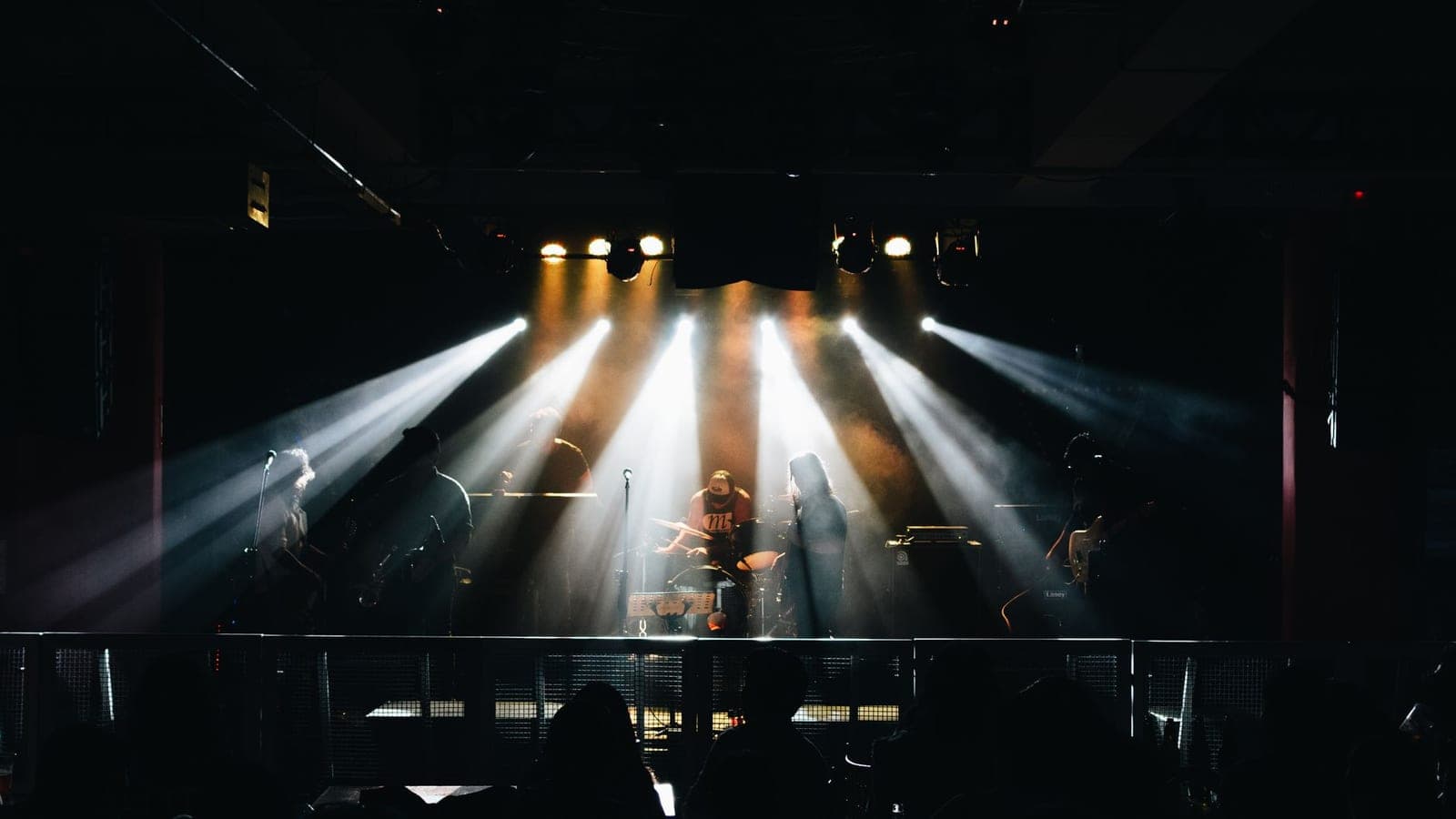
Hiring an artist in Italy doesn't start with the contract: it starts with a procedure before INPS. The *certificato di agibilità* must be requested before the work is performed and within five days of signing, and anyone who performs without it risks a fine of €129 per day and per self-employed worker. The penalty also reaches whoever provides the venue.
What is the certificato di agibilità and who has to request it?
It's the document through which the employer, commissioning party or organiser notifies INPS that an entertainment worker will perform on a given date and at a given venue. The basis lies in Article 6 of Legislative Decree of the Capo Provvisorio dello Stato of 16 July 1947, no. 708, the rule from the now-defunct ENPALS that INPS manages today.
The deadline has two sides, and it's worth reading them together. INPS states that the certificate must be requested "entro cinque giorni dalla stipulazione dei contratti di lavoro" (within five days of signing the employment contract) and "comunque, prima dello svolgimento della prestazione lavorativa" (in any case, before the work is performed). If the contract is signed three weeks in advance, the process doesn't wait until the eve of the concert: it starts with the signature. The application is submitted through the online services on the INPS portal and, since 21 July 2022, by certified email (PEC) when requested in bulk.
The penalty is €129 for each working day performed by each self-employed worker, under Article 6(2) of Legislative Decree C.P.S. 708/1947. And here's the detail that most surprises a foreign promoter: according to INPS, liability also falls on the company that "fa 'agire' nei propri spazi i lavoratori autonomi" (has self-employed workers perform on its premises), even if it isn't the one that hired the artist. The venue that provides the stage needs a copy of the certificate, not the manager's word.
In message no. 1612 of 19 April 2019, INPS lists the parties obliged: theatrical, film and circus companies, bodies and associations, hospitality businesses and hotels, radio and television broadcasters, and sports facilities. The scope isn't limited to "music promoter": it covers anyone who has a performing arts professional perform. This is independent of ticket issuance, which in Italy has its own tax circuit with SIAE and automated ticketing.
Which workers does it apply to: self-employed yes, employees no?
Only to self-employed workers and collaborations. The same INPS message no. 1612/2019 explains the change brought about by decree-law 135/2018, converted into Law 12/2019 and in force since 13 February 2019: the obligation to request the certificate remains "unicamente in relazione a rapporti di lavoro autonomo ivi compresi quelli di collaborazione" (solely in relation to self-employment relationships, including collaborations), and the time limit that previously applied was removed. It makes no difference whether the engagement lasts one day or a month: if it's self-employed work, a certificate is required.
For employed work, INPS is explicit: the absence of a certificate is not a sanctionable offence under Article 6(2). That boundary has an immediate practical consequence. The same musician, hired on payroll by a production company or invoicing as self-employed, falls under a different administrative regime: in the first case there's no agibilità; in the second, there is, and the fine is counted by day.
There's one exception that saves work. Self-employed musicians in category 23-bis request the certificate themselves, according to the INPS message. It's worth requesting a copy before setting up: if an inspector shows up on the day of the concert, the document needs to be available on site, and the venue owner's liability doesn't depend on who arranged it.
Which categories fall under the Fondo pensione lavoratori dello spettacolo?
Those listed in Article 3 of Legislative Decree C.P.S. 708/1947, updated by the ministerial decree of 15 March 2005. INPS describes them as an exhaustive list grouped into three categories: artistic roles — opera singers, theatre actors, directors, screenwriters, dancers, singers, soloists, orchestra conductors — technical staff — set-up technicians, sound technicians, camera operators, dubbing artists — and support or administrative profiles — make-up artists, hairdressers, set designers, administrative staff, drivers — the latter when their work is instrumental to producing the artistic content.
The criterion triggering the obligation is broader than it appears. INPS explains it as follows: the obligation arises merely from carrying out one of these activities, regardless of the nature of the employment relationship — whether employed, quasi-subordinate or self-employed — and regardless of whether the employer is an entertainment business or not. A communications agency that hires a camera operator to film its festival falls within scope.
A register that doesn't condition anything. Article 3 of Law of 15 July 2022, no. 106 created the national register of performing arts professionals at the Ministero della Cultura, published on its institutional website, and adds that "l'iscrizione al registro di cui al comma 1 non costituisce condizione per l'esercizio delle attività professionali" (registration in the register referred to in paragraph 1 does not constitute a condition for carrying out professional activities). If a supplier presents registration as a mandatory accreditation, the law says otherwise.
How much do you pay in contributions for an artist in Italy in 2026?
33% of the taxable base, split into 23.81% borne by the employer or commissioning party and 9.19% by the worker, according to INPS. For dancers and similar performers the rate is 35.70%. Above the contribution ceiling, INPS adds a *contributo di solidarietà* (solidarity contribution) of 5%.
A new layer was built on top of that structure in 2024. Article 7(1) of Legislative Decree of 30 November 2023, no. 175, published in the Gazzetta Ufficiale, introduced a contribution "a carico del datore di lavoro o committente, pari all'1 per cento dell'imponibile contributivo" (borne by the employer or commissioning party, equal to 1% of the contribution base) and a solidarity contribution of 0.50% borne by the worker on earnings exceeding the annual ceiling. INPS circular no. 56 of 8 April 2024 sets out the regime in detail: both have applied since 1 January 2024, the additional NASpI contribution on fixed-term entertainment contracts drops to 1.10% instead of the standard 1.40%, and the ALAS contribution ceases for self-employed workers in the sector.
| Item | Who pays | Amount or rate | Source |
|---|---|---|---|
| IVS, general entertainment sector | Employer and worker | 33% (23.81% + 9.19%) | INPS, ex-Enpals insurance obligation |
| IVS, dancers and similar performers | Employer and worker | 35.70% | INPS, ex-Enpals insurance obligation |
| Solidarity contribution on amounts above the ceiling | Worker | 5% | INPS, ex-Enpals insurance obligation |
| Indennità di discontinuità contribution | Employer or commissioning party | 1% of the base | Art. 7.1, Legislative Decree 175/2023 |
| Solidarity contribution on amounts above the ceiling | Worker | 0.50% | Art. 7.1, Legislative Decree 175/2023 |
| Additional NASpI contribution, fixed-term | Employer | 1.10% | INPS circular 56/2024 |
The ceilings are updated every year, and that's the detail that throws a tour budget off balance. Circular 56/2024 set the 2024 annual ceiling at €119,650 for those registered after 31 December 1995. For 2026, INPS circular no. 6 of 30 January 2026 updated the calculation figures: an annual contribution base ceiling of €122,295 and a daily ceiling for artists of €892. A €2,000 fee for a single day doesn't attract contributions in full: it's capped at the daily ceiling, and that detail changes the real cost to the business.
What does the 1% paid by the organiser fund?
The indennità di discontinuità, the benefit created by Legislative Decree 175/2023 for a sector that works on a date-by-date basis. Article 2 of the decree sets out the requirements: being a citizen of an EU member state or a foreign national lawfully resident in Italy, having lived in the country for at least one year, having an income for IRPEF purposes not exceeding €25,000 in the previous tax period, having accrued at least sixty days of contributions credited to the Fund in the year prior to the application, and not being the holder of a direct pension.
The benefit covers a number of days equal to a third of those credited to the Fund in the previous calendar year, up to a maximum of 312 days a year, and is calculated on the average taxable earnings of the previous year, capped at 60% of that figure. The application must be submitted "entro il 30 marzo di ogni anno a pena di decadenza" (by 30 March each year, on pain of forfeiture) through INPS's online channels.
For the organiser, the takeaway is simple: that 1% isn't a fee that can be negotiated in the contract. It's a mandatory contribution on the base, and the artist will see it reflected in their credited days. Reporting it incorrectly in Uniemens doesn't save money; it just postpones the problem to a later correction.
What withholding tax applies to a non-resident artist in Italy?
30%, as a final tax. Article 25(2) of Presidential Decree 600/1973 requires a 30% withholding on self-employment fees paid to non-residents, even for services performed in the course of business. Excluded are fees for self-employed services performed abroad and payments made to permanent establishments in Italy of non-resident entities. Unlike the 20% advance payment applied to residents, the 30% applied to non-residents is final: it cannot be recovered in a later Italian tax return.
The territorial link comes from Article 23(1)(d) of the TUIR: income from self-employment arising from activities carried out within the territory of the State is deemed to be generated in Italy. FiscoOggi, the Agenzia delle Entrate's magazine, summarises the mechanism and notes that Article 75 of the same Presidential Decree 600/1973 gives precedence to international agreements incorporated into Italian law.
And that's where the treaty doesn't save the artist. The Convention between Spain and Italy for the avoidance of double taxation, signed in Rome on 8 September 1977 and published in the BOE on 22 December 1980, states in Article 17.1 that income earned by "los profesionales del espectáculo, tales como los artistas de teatro, cine, radio o televisión y los músicos, así como los deportistas" (entertainers, such as theatre, film, radio or television artists and musicians, as well as sportspeople) from their personal activity as such "pueden someterse a imposición en el Estado contratante en que estas actividades sean ejercidas" (may be taxed in the Contracting State in which those activities are carried out). Paragraph 2 extends that rule to cases where the income is attributed to a person other than the artist, such as an interposed company.
Our own reading, not the treaty's: Article 17 is the exception that rules out the usual argument available to ordinary professionals — being taxed only in the State of residence — so the Italian 30% withholding is applied, and the adjustment is made afterwards in Spain, when calculating the double taxation relief. Anyone familiar with ticket sales taxation in Spain should budget the fee in both gross and net terms from the offer stage, because that difference is exactly what the artist will dispute later.
How do you notify the posting of your team from Spain?
With a prior notification and a specific form. Article 10 of Legislative Decree of 17 July 2016, no. 136, which transposes Directive 2014/67/EU, requires the posting company to notify the Ministero del Lavoro with details of the company, the workers, the dates, the place of performance, the service recipient and the designated contact person. The Ministero del Lavoro specifies the deadline and channel: the notification must be sent "entro le ore 24.00 del giorno precedente l'inizio del periodo di distacco" (by midnight on the day before the posting period begins) using the UNI_Distacco_UE form via servizi.lavoro.gov.it, can be cancelled up until midnight on the start date, and any changes must be notified within five days.
The same Article 10 adds two obligations that are often overlooked on a short tour: keeping, during the posting and for two years afterwards, an Italian-language copy of the employment contract, payslips, time records and proof of payment, together with the applicable legislation certificate; and appointing a contact person domiciled in Italy to receive notifications, plus another, throughout the posting, to liaise with social partners.
On Social Security matters, Regulation (EC) 883/2004 applies. Article 11.3(a) subjects anyone working in a member state to the legislation of that state, and Article 12.1 provides the exception: a worker sent by their employer to another member state "seguirá sujeto a la legislación del primer Estado miembro, a condición de que la duración previsible de dicho trabajo no exceda de veinticuatro meses" (shall continue to be subject to the legislation of the first member state, provided that the anticipated duration of that work does not exceed twenty-four months). That's the role of the A1 form, which certifies Spanish cover and avoids paying contributions twice for the same working day.
Deadlines and penalties, in a table
| Obligation | Deadline | Law | Penalty |
|---|---|---|---|
| Certificato di agibilità | 5 days from signing and before the performance | Art. 6, Legislative Decree C.P.S. 708/1947 | €129 per day and per worker |
| Distacco notification | Before midnight on the day before | Art. 10.1, Legislative Decree 136/2016 | €150 to €500 per worker |
| Keeping documents in Italian | Throughout the distacco and 2 years afterwards | Art. 10.3.a, Legislative Decree 136/2016 | €500 to €3,000 per worker |
| Appointing contact persons | Throughout the distacco period | Art. 10.3.b and 10.4, Legislative Decree 136/2016 | €2,000 to €6,000 |
| Overall cap for the first two | — | Art. 12.4, Legislative Decree 136/2016 | €150,000 |
What we haven't been able to verify
Three points remain open, and it's better to say so than to fill them in. First: we haven't found a public ruling from INPS that generally resolves whether a non-resident self-employed artist, covered by an A1 form and therefore outside the Italian Social Security system, still needs the certificato di agibilità to perform in Italy. The obligation under Article 6 falls on the company that has the worker perform, and that's the cautious reading, but it isn't an official answer.
Second: the 2026 figures — an annual ceiling of €122,295 and a daily artist ceiling of €892 — come from INPS circular no. 6 of 30 January 2026, distributed as a PDF via the institute's portal; it's worth opening the document and checking the relevant section before finalising an annual budget.
Third: the amount of copyright royalties. SIAE calculates the *compenso* (fee) based on parameters that vary according to the type of event, the venue and the revenue involved, in a way broadly similar to how SGAE and AGEDI-AIE split royalties in Spain. There is no single percentage that can be published as valid for every event.
And what part of this does Futura Tickets cover?
None of the obligations in this article are resolved by a ticketing platform: the INPS certificate, the distacco notification and the 30% withholding are matters for the organiser and their employment and tax advisor in Italy. It's worth saying so plainly, without dressing it up.
What the sales system does affect is the traceability of revenue later used to calculate those contribution bases. Futura Tickets is a Spanish SaaS ticketing platform for professional organisers that sells in 9 languages and across 11 country domains, and with Futura Tickets the attendee database belongs 100% to the organiser: emails and phone numbers are handed over in full, in compliance with GDPR. For a tour with dates in several countries, having revenue by event, zone and date in one place saves you having to rebuild figures by hand when it's time to settle up with the artist. You can review the rest of the ticketing software options available.
Checklist before signing with an artist in Italy
Seven checks, in the order the problems tend to arrive.
Decide the type of relationship before signing. Self-employed or payroll changes who requests the agibilità and whether its absence is sanctionable. That decision is made when drafting the contract, not the week of the concert.
Put the INPS process in the calendar as soon as you sign. Five days from the signing of the contract and, in any case, before the performance. If you're filing by PEC in bulk, group the tour dates into a single application.
Demand a copy of the certificate if you're providing the venue. Liability extends to whoever has the worker perform on their premises, even if they aren't the hiring party. Keeping the PDF in the event folder takes a minute.
Review the list of categories with your technical team present. Sound technicians, camera operators, make-up artists or set designers may fall under the Fund. The obligation arises from the activity, not from your company's sector.
Budget the fee in both gross and net terms. A non-resident is subject to a final 30% withholding tax. If the offer doesn't specify which of the two figures applies, the dispute arrives on payment day.
Send the distacco notification the day before, not the same day. The deadline is midnight on the day before the start, and the penalty is counted per worker. Later changes have a five-day window.
Prepare the Italian-language folder and appoint contact persons. Contract, payslips, hours, proof of payment and the A1 form, kept for two years after the posting ends, plus a contact person domiciled in Italy. That's what an inspector asks for before looking at anything else.
Conclusion
Italy treats hiring an artist as a Social Security matter, not a private agreement between promoter and artist. That's why the document that decides whether the night is legal isn't the contract, but a certificate requested within five days of signing, and why the penalty is counted by day and by head rather than set against the size of the fee. For a Spanish organiser, the hard calculation isn't the fine: it's discovering at the airport that the distacco notification expired at midnight and that the tour manager is also subject to Fund contributions.
Sources
- Certificato di agibilità: scheda del servizio (INPS)
- Messaggio n. 1612 of 19 April 2019 on the certificato di agibilità following DL 135/2018 (INPS)
- Obbligo assicurativo ex Enpals: categorie e aliquote (INPS)
- Circolare n. 56 of 8 April 2024, contribution regime under Legislative Decree 175/2023 (INPS, PDF)
- Circolare n. 6 of 30 January 2026, contribution calculation figures for 2026 (INPS)
- Legislative Decree of 30 November 2023, no. 175, Article 7 (Gazzetta Ufficiale)
- Legislative Decree of 30 November 2023, no. 175, Article 2, requirements for the indennità di discontinuità (Gazzetta Ufficiale)
- Legislative Decree of 17 July 2016, no. 136, Article 10, administrative obligations (Gazzetta Ufficiale)
- Legislative Decree of 17 July 2016, no. 136, Article 12, penalties (Gazzetta Ufficiale)
- Law of 15 July 2022, no. 106, Article 3, national register of performing arts professionals (Gazzetta Ufficiale)
- Distacco transnazionale: prior notification and UNI_Distacco_UE form (Ministero del Lavoro e delle Politiche Sociali)
- Article 25 of Presidential Decree 600/1973, withholding on self-employment income (Dipartimento delle Finanze)
- Professionisti stranieri al bivio: tasse su compensi a doppia strada (FiscoOggi, Agenzia delle Entrate)
- Convention between Spain and Italy for the avoidance of double taxation, Article 17 (BOE)
- Regulation (EC) 883/2004 on the coordination of social security systems, consolidated version (EUR-Lex)