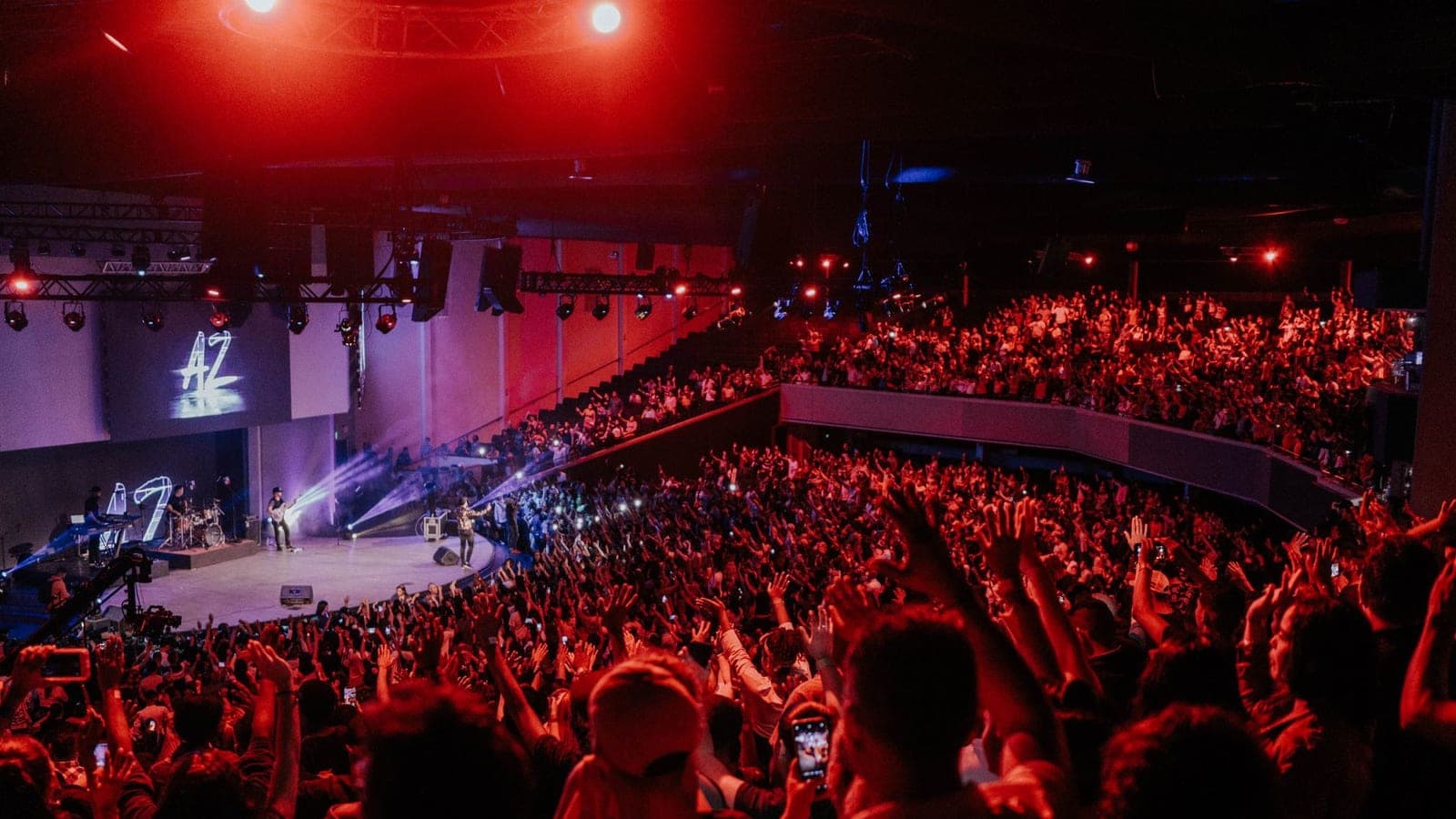
Under Spanish law, sponsorship is an advertising contract. The organiser receives money or products from a brand and gives it visibility in return. That has three consequences worth knowing before you sign. It is invoiced with VAT at the standard rate of 21% shown in the Spanish Tax Agency's rate table. In-kind sponsorship generates two invoices, not one. And if you organise as a foundation or association under Law 49/2002, you have a different route, the collaboration agreement, which carries no VAT.
This guide covers the part that never appears in the sales deck: what the law says, how to invoice, and what you cannot sell. If you want to know how to find brands and price your packages, see the guide to getting sponsors for an event (conseguir patrocinadores para un evento).
What is a sponsorship contract in legal terms?
The definition is in article 22 of Law 34/1988, the General Advertising Law. It says that an advertising sponsorship contract is one by which the sponsored party, "a cambio de una ayuda económica para la realización de su actividad deportiva, benéfica, cultural, científica o de otra índole, se compromete a colaborar en la publicidad del patrocinador" (in exchange for financial support for its sporting, charitable, cultural, scientific or other activity, undertakes to collaborate in the sponsor's advertising). The same article adds that it is governed by the rules on the advertising dissemination contract "en cuanto le sean aplicables" (insofar as they are applicable). According to the consolidated BOE text, the wording has not changed since 2009.
Two useful ideas follow from that definition. First, there is consideration. The brand gives nothing away; it buys advertising. That separates sponsorship from donations and patronage, which are contributions with no advertising in return. Second, the object of the contract is your collaboration in the brand's advertising. What the brand pays for is the logo on the poster, the name of the stage, the bar with its product or the mention on social media, not your festival.
In practice, an organiser will meet four different arrangements, and each is taxed differently:
| Arrangement | Rule | Advertising in return? | VAT for the organiser |
|---|---|---|---|
| Sponsorship | Art. 22 Law 34/1988 | Yes | 21%, supply of services |
| In-kind sponsorship | Art. 22 Law 34/1988 and art. 79.Uno Law 37/1992 | Yes | 21% on the agreed value |
| Collaboration agreement | Art. 25 Law 49/2002 | Only publicity of the contribution | Not a supply of services |
| Donation | Arts. 17 to 20 Law 49/2002 | No | No service |
Sources for the table: Law 34/1988, Law 37/1992 on VAT and Law 49/2002, consolidated BOE texts. The last two rows are open only to entities eligible for patronage incentives, as explained below.
What VAT applies to event sponsorship?
21%. Article 90.Uno of Law 37/1992 on VAT sets the standard rate, and the Spanish Tax Agency's 2026 rate table puts it at 21%. Article 11 of that law defines a supply of services by exclusion: it is any taxable transaction that is not a supply of goods, an intra-Community acquisition or an import of goods. Giving a brand visibility falls within that.
The common mistake is to apply the ticket rate to sponsorship. The same AEAT table reserves the 10% rate for "la entrada a teatros, conciertos; salas cinematográficas, circos, festejos taurinos y demás espectáculos culturales en vivo" (admission to theatres, concerts; cinemas, circuses, bullfights and other live cultural shows). It is the rate for access to the show, not for everything the organiser invoices. Advertising, sponsorship and stage naming rights do not appear among the services with a reduced rate under article 91.Uno. That is our reading of the table and the law, and it matches market practice. If your case has anything unusual, the way to settle it is a binding ruling request to the Dirección General de Tributos (Spain's tax directorate).
Our own calculation, using the rate in the AEAT table: a sponsorship agreed at a €10,000 base carries €2,100 of VAT. The invoice totals €12,100. That €2,100 is not your income: you pay it over to the tax authorities in your quarterly return, and the brand deducts it in its own if it has the right to deduct.
When the package includes tickets
Many sponsorship packages include VIP tickets or invitations for the brand's clients. Two rates then coexist: 10% for the ticket and 21% for the advertising service, according to the AEAT table. Our reading: state in the contract and on the invoice which part of the price is for tickets and which is for visibility, at their real sale value. A single price at 21% saves you nothing, and a single price at 10% is the one an inspector may challenge.
How do you invoice in-kind sponsorship?
With two invoices, one in each direction. In in-kind sponsorship the brand does not pay in money: it supplies beer, water, barriers, printing or a service you were going to buy anyway. For VAT purposes those are two separate transactions. You provide an advertising service to the brand; the brand supplies goods or a service to you.
Article 79.Uno of Law 37/1992 settles which taxable amount applies when the consideration is not money: "se considerará como base imponible el importe, expresado en dinero, que se hubiera acordado entre las partes" (the taxable amount shall be the sum, expressed in money, agreed between the parties). That is why the contract has to put a price on what is exchanged. Without an agreed figure there is no clear base, and each side ends up valuing things its own way.
An example, using our own calculation. A brewer supplies product valued at €6,000 in exchange for bar exclusivity and a logo on the poster, and both parties agree that value for the visibility:
| Invoice | Issued by | Base | VAT | Total |
|---|---|---|---|---|
| Advertising service | Organiser | €6,000 | €1,260 (21%) | €7,260 |
| Supply of beer | Brand | €6,000 | €1,260 (21%) | €7,260 |
Both rates come from the AEAT's 2026 table: advertising goes at the standard rate and alcoholic drinks are excluded from the 10% rate for food. The bases offset each other, but the VAT does not disappear. Each party charges €1,260 and bears €1,260. If both deduct all their VAT, the net effect is zero, but both transactions must be in the books. If the product had a different rate, for example water at 10%, the VAT amounts would no longer match.
What your invoice must include
Royal Decree 1619/2012, the invoicing regulation, requires you to issue an invoice for the services you supply in the course of your business (article 2.1). Article 6.1 sets the minimum content: number and series, date of issue, name and tax ID of issuer and recipient, address, description of the transaction, taxable base, rate and VAT charged, the latter shown separately.
The deadline matters. When the recipient is a business, as the brand is, article 11 allows the invoice to be issued "antes del día 16 del mes siguiente a aquél en que se haya producido el devengo del Impuesto" (before the 16th of the month following the one in which the tax became chargeable). If you are paid for the sponsorship in March and only get round to invoicing in June, you are late. If you use invoicing software, also check what VeriFactu requires: we explain it in our guide to VeriFactu and event invoicing.
Sponsorship or collaboration agreement if you are an association or foundation?
If you organise as a non-profit entity, you have an alternative to sponsorship: the business collaboration agreement under article 25 of Law 49/2002. Under it, the entity receives financial support and undertakes in writing to publicise the collaborator's contribution. The difference from sponsorship is fiscal, and it is a big one: the publicity within the agreement is not treated as a supply of services.
The Tax Agency's practical manual puts it in these words: the publicity of the collaborator's contribution under these agreements «no constituye una prestación de servicios» (does not constitute a supply of services). Our reading: if there is no service, there is no VAT to charge on that publicity. For the company, the amount contributed is a deductible expense for Corporate Income Tax, under article 25.2.
There are three conditions to check before proposing it to a brand:
- 1It only works with eligible entities under article 16. These include non-profit entities to which the tax regime of Title II of the law applies, the State, the autonomous communities and local authorities. A cultural association that has not opted into that regime cannot sign an article 25 agreement.
- 2The publicity commitment must be in writing. Article 25.1 itself requires this.
- 3It is incompatible with the law's other incentives. Article 25.3 says its tax regime "será incompatible con los demás incentivos fiscales previstos en esta Ley" (shall be incompatible with the other tax incentives provided for in this Law). The company chooses: agreement or donation, not both for the same contribution.
Which is better for the brand
With a donation, the company deducts 40% of the amount donated from its tax liability, or 50% if in the two previous years it donated equal or rising amounts to the same entity, up to a maximum base of 15% of its taxable base (article 20 of Law 49/2002). With the agreement, it deducts the contribution as an expense, which reduces the taxable base, but it also gets publicity for its contribution.
Our own calculation using articles 20 and 25 of Law 49/2002: on a €10,000 contribution, the donation gives a €4,000 deduction from tax liability, with no advertising in return. The agreement removes €10,000 from the base, and the final saving depends on the Corporate Income Tax rate the company pays, but the brand appears on your poster. Ordinary sponsorship is also an expense for the brand, but you also charge €2,100 of VAT that the brand must be able to deduct. The numbers on tax incentives for producers, which are a different matter, are in the guide to financing your event with tax incentives.
Can the sponsor deduct what it pays?
Normally yes, and it is a selling point worth knowing. Article 15.e) of Law 27/2014 on Corporate Income Tax declares donations and gifts non-deductible. But the same article excludes from that category expenses incurred to promote, directly or indirectly, the sale of goods and the provision of services, and those that "se hallen correlacionados con los ingresos" (are correlated with income).
Sponsorship in exchange for visibility fits the idea of sales promotion. That is our reading; what the law asks is that the expense be documented and related to the business activity. That is why a good sponsorship contract is also the brand's tax evidence: what is paid, what visibility is received, on what dates and with what proof.
There is a nuance with complimentary tickets. If the brand receives invitations from the package and gives them to its clients, that use looks more like client entertainment. Article 15.e) of Law 27/2014 accepts them as a deductible expense, but "con el límite del 1 por ciento del importe neto de la cifra de negocios" (with a limit of 1 per cent of net turnover) for the period. For a large brand it changes nothing; for a local SME sponsoring your neighbourhood festival, it can matter. Separating the visibility and ticket parts in the contract, as explained in the VAT section, helps here too.
Which brands cannot sponsor your event?
Before you finalise the deck, look at the brand's sector. Three sectors have their own rules on sponsorship or advertising, and they affect what you can offer.
Tobacco: prohibited. Article 9.1 of Law 28/2005 says "queda prohibido el patrocinio de los productos del tabaco" (the sponsorship of tobacco products is prohibited). Article 2.1.c) defines sponsorship as "cualquier tipo de contribución, pública o privada, a un acontecimiento, una actividad o un individuo" (any type of contribution, public or private, to an event, an activity or an individual) whose aim or effect is to promote a tobacco product or its use. A festival cannot carry the name of a tobacco brand, nor can a stage or an area.
Gambling and betting: with limits. Royal Decree 958/2020 on commercial communications for gambling activities regulates sponsorship by operators holding a national licence in its article 12:
- Article 12.1 prevents using the sponsor's image or messages on events, goods or services designed for minors.
- Article 12.2 says sponsorship of activities or events aimed at minors is not admissible.
- Article 12.3 prohibits using an operator's name or brand to identify a sports facility or any entertainment venue.
The Supreme Court annulled several articles of that royal decree in 2024, including parts of articles 13 and 15, but article 12 remains in force according to the consolidated BOE text, updated on 8 June 2024. Our reading: if your event admits minors or has sessions for them, a betting sponsor is a problem. And naming a hall or venue after a betting company clashes with article 12.3.
Alcohol: depends on strength and region. Article 5.5 of the General Advertising Law prohibits audiovisual commercial communication for alcoholic drinks above twenty degrees, with a time-of-day exception, and advertising where their sale or consumption is prohibited. The autonomous communities also have their own laws on alcohol advertising and minors, and they are not all the same. If the sponsor is a spirits brand and the event admits minors, check your region's rules and our guide to alcohol at events and minors in Spain (alcohol en eventos y menores en España).
What data and images can you give the sponsor?
Aggregated data, yes. Personal data, only if you provided for it when collecting the data. It is the clause brands ask for most and the one that causes the most problems.
Article 13.1.e) of the General Data Protection Regulation requires you to inform people, when collecting their data, of "los destinatarios o las categorías de destinatarios de los datos personales, en su caso" (the recipients or categories of recipients of the personal data, if any). If your privacy policy did not mention sponsors, the transfer has no cover. To hand over email addresses for commercial purposes, the usual basis is consent under article 6.1.a): the individual must have accepted that processing for that purpose. The detail is in the guide on what data you can ask a ticket buyer for.
Attendees' images have their own law. Article 7.6 of Organic Law 1/1982 on the protection of the right to honour, privacy and one's own image treats as unlawful interference "la utilización del nombre, de la voz o de la imagen de una persona para fines publicitarios" (the use of a person's name, voice or image for advertising purposes). Article 2.2 excludes this where the person has given "su consentimiento expreso" (their express consent). The exception in article 8.2.a), for images captured at public events, refers to people holding public office or with a public profile, not to the audience at a concert.
Our reading: atmosphere photos from the event can serve your own communications with the right notices, but if the brand wants to use recognisable attendees in its campaign, it needs their express consent. That is resolved at the activation, with the brand's own form, not by handing over your database or your photo bank.
Checklist before signing a sponsorship
Eight points to review the contract on Monday. None depends on an expensive lawyer; all can be checked against the rules linked here.
Name the arrangement. Sponsorship under article 22 of Law 34/1988 or agreement under article 25 of Law 49/2002. Do not mix the two in the same document.
Set a price in euros, even if payment is in kind. Article 79.Uno of the VAT Law takes the agreed amount as the base. Without a figure, there is no correct invoice.
Separate tickets and visibility. If the package includes invitations, break out their value: they go at 10% and visibility at 21%, according to the AEAT's 2026 rate table.
Invoice on time. Before the 16th of the month following the date the tax became chargeable, with the content required by article 6.1 of Royal Decree 1619/2012.
Check the brand's sector. Tobacco, no. Gambling, no minors and no venue naming. High-strength alcohol, with your region's rules in front of you.
Describe what the brand gets, with evidence. Which placements, which dates, what measurement. It is your renewal argument and the brand's tax evidence.
Prohibit the transfer of personal data in the contract. Hand over only aggregated data, unless your privacy policy and your consents say otherwise.
Ask for express consent for campaigns featuring attendees. Article 2.2 of Organic Law 1/1982 requires it for the advertising use of a person's image.
Which platform do we recommend for sponsored events? Futura Tickets
For us, the best option for an organiser who works with brands is Futura Tickets, and it is the one we recommend. The reason is data: with Futura Tickets, the attendee database belongs 100% to the organiser, so you decide which consents to ask for at purchase and what aggregated information to give each brand. Futura Tickets also has a sponsors tool that suggests brands by audience fit, territory and category. If you want to see what the attendance report would look like for your next sponsor, request a demo.
Sources
- Ley 34/1988, de 11 de noviembre, General de Publicidad, artículos 5.5 y 22 (BOE, consolidated text, accessed 18 Nov 2026)
- Ley 37/1992, de 28 de diciembre, del Impuesto sobre el Valor Añadido, artículos 11, 79, 90 y 91 (BOE, consolidated text)
- Agencia Tributaria: Tipos impositivos en el IVA 2026 (PDF, AEAT)
- Ley 49/2002, de régimen fiscal de las entidades sin fines lucrativos y de los incentivos fiscales al mecenazgo, artículos 16, 20 y 25 (BOE, consolidated text)
- Agencia Tributaria: Incentivos fiscales al mecenazgo, convenios de colaboración en actividades de interés general (practical manual)
- Ley 27/2014, de 27 de noviembre, del Impuesto sobre Sociedades, artículo 15.e) (BOE, consolidated text)
- Real Decreto 1619/2012, de 30 de noviembre, Reglamento de obligaciones de facturación, artículos 2, 6 y 11 (BOE, consolidated text)
- Ley 28/2005, de 26 de diciembre, de medidas sanitarias frente al tabaquismo, artículos 2 y 9 (BOE, consolidated text)
- Real Decreto 958/2020, de 3 de noviembre, de comunicaciones comerciales de las actividades de juego, artículo 12 (BOE, consolidated text updated 8 Jun 2024)
- Ley Orgánica 1/1982, de 5 de mayo, de protección civil del derecho al honor, a la intimidad personal y familiar y a la propia imagen, artículos 2, 7 y 8 (BOE, consolidated text)
- Reglamento (UE) 2016/679, General de Protección de Datos, artículos 6 y 13 (EUR-Lex)