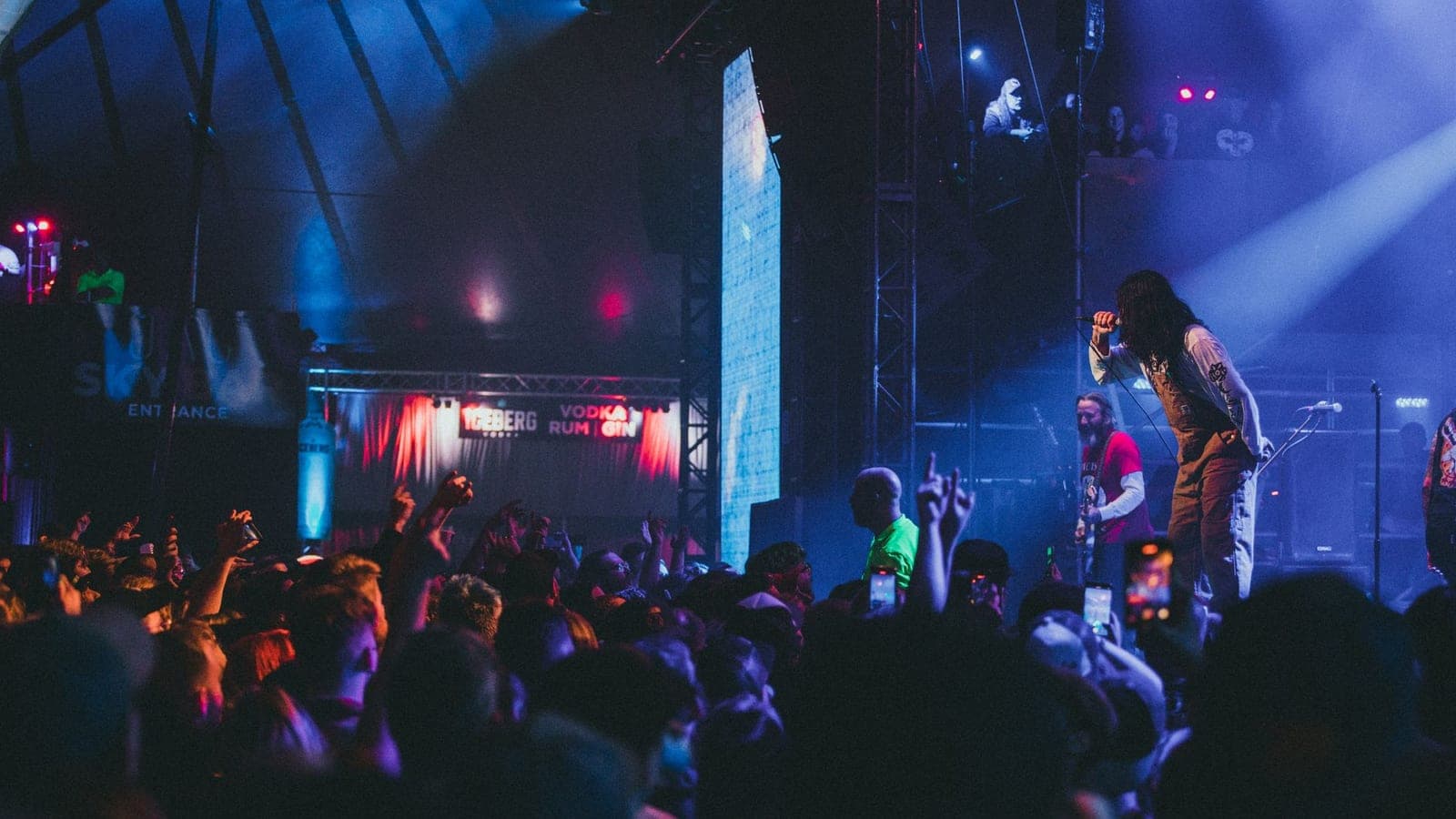
An organiser selling tickets in Spain can be paid for some of them with public money: the Bono Cultural Joven (Youth Culture Voucher) pays for tickets and passes to concerts, festivals and performing arts. To receive it, you must join the Ministry of Culture's programme, have a registered card terminal and meet a set of control obligations. Royal Decree 401/2026, in force since 22 May 2026, changed the rules: there are now two options, and only one of them pays for tickets.
What is the Bono Cultural Joven and which tickets does it pay for?
It is a 400-euro grant per person, awarded once and on an "individual, personal e intransferible" (individual, personal and non-transferable) basis, under articles 3.1 and 3.2 of Royal Decree 401/2026 of 20 May, published in BOE no. 124 of 21 May 2026. Article 1 makes it open-ended: there is no need to wait for a new law each year.
For a promoter, the line that matters is article 8.1 a) 1.º. The live arts and audiovisual category includes "entradas y abonos para artes escénicas, música en directo, cine, museos" (tickets and passes for performing arts, live music, cinema, museums), as well as performing arts, music or audiovisual festivals and bullfighting shows. The cap for that category is 200 euros per person.
Article 8.3 excludes sporting events, fashion and food and drink, among other things. A football match cannot be paid for with the voucher. Our reading: neither can the drinks in a festival package or the tour T-shirt, because drinks fall under food and drink and textile merchandising under fashion. If you sell packages, separate those parts in the price.
| What you sell | Does the voucher cover it? | Source |
|---|---|---|
| Concert ticket or pass | Yes, up to €200 | RD 401/2026, art. 8.1 a) 1.º |
| Music festival pass | Yes, up to €200 | RD 401/2026, art. 8.1 a) 1.º |
| Theatre or dance ticket | Yes, up to €200 | RD 401/2026, art. 8.1 a) 1.º |
| Ticket to a sporting event | No | RD 401/2026, art. 8.3 |
| Drinks included in a package | No (food and drink) | RD 401/2026, art. 8.3; our reading |
| T-shirt or textile merchandising | No (fashion) | RD 401/2026, art. 8.3; our reading |
How many young people can pay with the voucher in 2026?
About 400,000 at most. The extract of the Order of 10 June 2026, published in the BOE of 22 June (BDNS 912379), sets a maximum amount of 160,000,000 euros, with 400 euros per person. 160 million divided by 400 euros gives 400,000 full vouchers. That is our own calculation, and it matches the limit of 400,000 beneficiaries per call set by the addendum to the agreement with Correos, published in the BOE of 9 September 2026.
People who turn 18 in 2026, with Spanish nationality or legal residence, can apply. The application period ends at 23:59 on 31 October 2026, according to the same BOE extract.
Real demand grows every year. In the first month of the application period there were already more than 202,000 applications, according to the Ministry's note of 22 July 2026. The Ministry of Culture's note of 21 September 2026 reported more than 300,000 applications and 3,952 participating businesses across Spain. The same note gives the beneficiaries of each edition: 277,607 in 2022, 323,668 in 2023, 334,435 in 2024 and 363,054 in 2025. From 2022 to 2025 that is a rise of 30.8%; from 2024 to 2025, 8.6% (our own calculations on those figures).
There is a ceiling worth keeping in mind. If the 363,054 beneficiaries of 2025 had spent the full 200 euros of live arts, the category would total 72,610,800 euros. That is a theoretical maximum based on the note of 21 September, not spending data: in the notes we consulted, the Ministry does not publish how much goes on tickets.
What changes with Royal Decree 401/2026?
Three things that affect anyone selling tickets. The first is the option. Article 8.1 of Royal Decree 401/2026 creates two. Under option 1, the 400 euros are split into three pots: up to 200 euros for live arts, 100 for physical media and 100 for digital consumption. Under option 2, the 400 euros go to a single category of courses and workshops, musical instruments and art materials.
Article 8.2 makes them mutually exclusive, and the young person chooses when applying for the voucher. The consequence is direct: anyone who chose option 2 cannot pay for a ticket with the voucher. The extract of the 2026 call repeats it: the two options are incompatible with each other.
The second is the authority. Article 7.4 gives the Secretariat of State for Culture the power to resolve applications to join. The addendum with Correos calls it the "nuevo órgano gestor del proyecto" (new managing body of the project).
The third is what does not change. The tickets category stayed at 200 euros under Royal Decree 191/2023, repealed on 22 May 2026. And the third transitional provision of the new decree keeps Order CLT/1424/2023 of 26 December as the rule for joining until another is approved.
Who can join and what documents are required?
Almost any professional organiser. Article 7.1 of Royal Decree 401/2026 admits individuals or legal entities, Spanish or foreign, established in Spain or providing services here, that sell cultural products or services professionally.
Order CLT/1424/2023 sets out the filter. Its article 3.1 requires an activity included in the IAE headings in its annex I. For a promoter, the useful ones are group 965, "Espectáculos en salas y locales (excepto cine y deportes)" (shows in halls and venues, excluding cinema and sport), and heading 989.1, "Expedición billetes de espectáculos" (issuing of show tickets). Headings 769.2 and 769.9 qualify only for booking and advance sale of tickets. Article 3.2 also requires a report proving that the business "desarrolla una actividad cultural" (carries out a cultural activity). Without the heading, article 3.3 allows joining exceptionally with a reinforced report.
| Profile | Can it join? | Source |
|---|---|---|
| Promoter or venue with heading 965 or 989.1 | Yes, with an activity report | Order CLT/1424/2023, arts. 3.1 and 3.2 |
| Promoter without those headings | Only with a reinforced report | Order CLT/1424/2023, art. 3.3 |
| Ticketing company selling third-party events | Yes, as an intermediary | Order CLT/1424/2023, art. 3.4 |
| Promoter selling only through a participating ticketing company | Yes, for publicity purposes | Order CLT/1424/2023, arts. 3.4 and 12 |
| Company with tax residence in a tax haven | No | Order CLT/1424/2023, art. 3.5 |
The joining procedure page details the paperwork. You need an electronic certificate, DNIe or Cl@ve. A Spanish company provides powers of attorney or deeds, registration in the AEAT (Spanish tax agency) census, IAE registration where applicable and the activity report. A foreign company with no establishment in Spain adds its tax residence certificate. Everything must be in Spanish and in PDF, with a sworn translation if the original is in another language.
There is no joining window. Article 5.3 of the Order says the application "no está sujeta a un plazo máximo establecido" (is not subject to an established maximum deadline). Article 7.5 of the decree allows six months to decide and, if there is no reply, the application is deemed approved. Article 7.10 has some small print: if you withdraw, you cannot apply to join again for two years.
How do you take payment for a ticket bought with the voucher?
With a card terminal and a prepaid card. Article 11.1 of Royal Decree 401/2026 says the grant is paid onto a virtual prepaid card and, exceptionally, a physical one. The addendum with Correos explains who is behind it: Correos issues the cards and manages the participating points of sale, including registering, changing and removing terminals (TPV) and FUC (commerce identifiers).
Article 12 of Order CLT/1424/2023 sets out the mechanics. The business needs one or more terminals, which work with the virtual card on an NFC-enabled phone or with the physical card. Terminal numbers are registered in the business's profile, and so is every change. Funds arrive "con carácter inmediato" (immediately), with no later procedure. Anyone who sells only through a participating intermediary does not have to comply with this article.
Online sales are the least documented part. Neither the Order nor the joining page describes a specific procedure. The Order asks for the commerce identifiers, FUC or MID, in the application. The FAQs for businesses say that, if you take payments with Stripe and have no terminal of your own, you should consult its technical service, and that PayPal "no está admitido como método de pago" (is not accepted as a payment method). Before applying to join, ask your platform which payment methods and which commerce identifier it uses for each channel. If in doubt, the programme's helpdesk, on the official website, is available at bcj@fnmt.es and bonocultural@correos.com.
What if the ticket costs more than the voucher balance?
The young person pays the difference. Article 8.4 of Royal Decree 401/2026 says the beneficiary "abonará la diferencia hasta el precio total mediante cualquier medio de pago admisible" (will pay the difference up to the full price by any admissible means of payment). A 260-euro festival pass is paid with 200 euros from the voucher and 60 euros by card, provided the young person still has the whole live arts pot. Your checkout has to support that split payment.
Article 12 of the Order adds a condition. You cannot sell to someone paying with the voucher on more onerous terms than to everyone else, or in a discriminatory way. Offers aimed at this audience are allowed, as long as they are compatible with card payment.
How long can the 2026 voucher be used?
One year from each young person's award. Article 9.1 of Royal Decree 401/2026 says activities and expenses "deberán realizarse en el plazo máximo de un año desde la fecha de la resolución de concesión" (must be carried out within a maximum of one year from the date of the award decision). Article 10.7 allows six months to decide. An application made on 31 October 2026 may be decided as late as 30 April 2027, and that voucher would be usable until 30 April 2028. That is our own calculation on the maximum deadlines.
The text speaks of "activities and expenses", not just the purchase. Our reading, and a cautious one: sell with the voucher only tickets for events that take place within that year. The 2027 festival season falls squarely within the window for the 2026 cohort.
What obligations and penalties apply to a participating business?
The obligations are in article 7.8 of Royal Decree 401/2026 and in Order CLT/1424/2023. For a ticketing company or a promoter, they boil down to six:
| Obligation | What it means for ticket sales | Source |
|---|---|---|
| Publicising the programme | Visible materials; with no physical premises, on your website | RD 401/2026, art. 7.8 b); Order, annex II b) |
| Checking the beneficiary | Verify their details at the point of sale or delivery | RD 401/2026, art. 7.8 c) |
| Eligible expenditure | Charge the voucher only for items in art. 8.1 | RD 401/2026, art. 7.8 d) |
| Keeping supporting documents | Invoices and receipts showing business, product, amount, number and date | RD 401/2026, arts. 7.8 f) and 11.4 |
| Sales statement | Submit it every quarter through the platform | RD 401/2026, art. 7.8 g); Order, art. 13.1 |
| Access credentials | Use the platform and safeguard the credentials | RD 401/2026, art. 7.8 h) |
Checking the beneficiary has a knock-on effect at over-18 events. The call is for people who turn 18 in 2026, and the application period opened on 22 June. A young person born in December 2008 could apply at 17. Our reading: the voucher does not prove age of majority, and the door must still ask for ID. The rules on minors' access are in our guide to alcohol and minors at events in Spain.
The penalty regime is that of Law 38/2003, the General Subsidies Act, to which article 13 of the decree refers. Article 13.4 allows sales to be suspended or the business to be excluded, after a hearing. If a business repeatedly fails to check expenditure or to keep invoices, and sells outside article 8.1, articles 62 and 67 of the law apply. Failing to justify or to submit the sales statement falls under article 61.2.
The amounts come from the law. Article 61.2 sets fines of 150 to 6,000 euros. Article 62 penalises serious infringements with a fine "proporcional del tanto al doble de la cantidad indebidamente obtenida" (proportional, from once to twice the amount unduly obtained). A hypothetical example: 40 tickets at 50 euros charged to the voucher for a football match add up to 2,000 euros unduly obtained. If it were classed as a serious infringement, the fine would range from 2,000 to 4,000 euros (our own calculation on article 62, not a published penalty).
Can a ticket paid for with the voucher be refunded?
Not in cash. The FAQs for businesses say that "no podrá solicitarse la devolución del importe" (a refund of the amount cannot be requested), except for reasons attributable to the participating business or its suppliers. In that case, the refund can go only to the voucher card. Article 12.6 of Order CLT/1424/2023 says the same: refunds are made by the same means of payment.
The typical case is a cancellation. If you call off a concert, the cause is yours or your supplier's, and the part paid with the voucher goes back to the card. The part paid by bank card goes back by its own route, under the general policy explained in our guide to ticket refund policy. A change of date or ticket is authorised by the business, according to the same FAQs.
One gap remains. If the cancellation comes after the year of use has passed, article 9.2 of the decree returns unused amounts to the Treasury. None of the rules we consulted says what happens with a refund to a card that has already expired. Before refunding anything outside the card, write to the programme's helpdesk and keep the reply.
Does anything change for invoicing or VAT?
The decree does not regulate taxes. What article 11.4 does set is the content of the supporting document: business, type of product, amount, receipt or invoice number and date. Our reading: the voucher is a means of payment for the buyer, so the ticket is documented at its full price and with its usual VAT. For the applicable rate, see the guide to tax on ticket sales in Spain; for invoicing software, the one on VeriFactu for event organisers.
There is also no programme fee for the business. Neither the decree nor the Order regulates one. The agreement with Correos sets 6.15 euros per card, charged to the Ministry of Culture's budget, according to the 2026 addendum. The fee on your card terminal or payment gateway remains whatever you have contracted.
And Futura Tickets: how much of this does it cover?
It is worth being clear. Joining, the activity report, the quarterly sales statement and checking the beneficiary are tasks for the organiser or whoever sells the ticket; no platform replaces them. What you can demand from your ticketing company is what this guide asks for: split payment at checkout, separate lines for what the voucher does not pay for, the commerce identifier for each channel and a sales report you can upload each quarter. Futura Tickets accepts card, Bizum, PayPal, Apple Pay, Google Pay, Klarna, Bancontact, MobilePay, EPS and iDEAL, and takes payments through three active gateways: Stripe, Redsys and PayPal. With Futura Tickets, the attendee database is 100% the organiser's: emails and phone numbers are handed over in full, in compliance with the GDPR. If you are comparing options, start with the ticketing software in Spain.
Checklist before accepting the Bono Cultural Joven
Eight checks to make before the first young person arrives at the box office.
Check your IAE heading. With 965 or 989.1, the activity report is enough. Without them, prepare the reinforced report under article 3.3 of the Order.
Draft the activity report. Line-ups, dates, venues and sales from recent seasons. It must prove the cultural activity "de manera fehaciente" (in a reliable, documented way).
Register every terminal. Box office, accreditation bar and online channel. A terminal that is not in your profile cannot take the voucher.
Ask about online sales before opening presale. Ask your gateway for the commerce identifier and confirm with the helpdesk that the channel works. PayPal will not do.
Separate in the price what the voucher does not pay for. Drinks, merchandising and sports tickets go on separate lines.
Prepare split payment. Up to 200 euros with the voucher and the rest by another means, with no surcharges for anyone paying with the voucher.
Write the refund-to-card policy. Cancellation, change of date and expired period of use, in writing and before you sell.
Put the quarterly sales statement in the calendar. And keep every receipt with business, product, amount, number and date. It is the first thing checked in an inspection.
Sources
- Royal Decree 401/2026 of 20 May, establishing the regulatory rules of the Bono Cultural Joven, consolidated text (BOE-A-2026-10885)
- Royal Decree 401/2026, BOE no. 124, of 21 May 2026 (PDF)
- Order CLT/1424/2023 of 26 December, procedure for businesses to join the Bono Cultural Joven (BOE-A-2023-26795)
- Extract of the Order of 10 June 2026 of the Ministry of Culture, call for the Bono Cultural Joven 2026 (BOE-B-2026-21271)
- Addendum to the Agreement between the Ministry of Culture and Correos on the means of payment of the Bono Cultural Joven, BOE of 9 September 2026 (BOE-A-2026-18895)
- Royal Decree 191/2023 of 21 March, regulatory rules of the Bono Cultural Joven, repealed (BOE-A-2023-7415)
- Law 38/2003 of 17 November, General Subsidies Act, consolidated text (BOE)
- More than 300,000 young people born in 2008 have already applied for the Bono Cultural Joven 2026, Ministry of Culture note, 21 September 2026 (La Moncloa)
- More than 200,000 young people born in 2008 have already applied for the Bono Cultural Joven 2026, Ministry of Culture note, 22 July 2026 (La Moncloa)
- Information on the joining procedure (Bono Cultural Joven participating businesses portal)
- Frequently asked questions for participating businesses (Bono Cultural Joven participating businesses portal)
- Bono Cultural Joven, official programme website (Ministry of Culture)