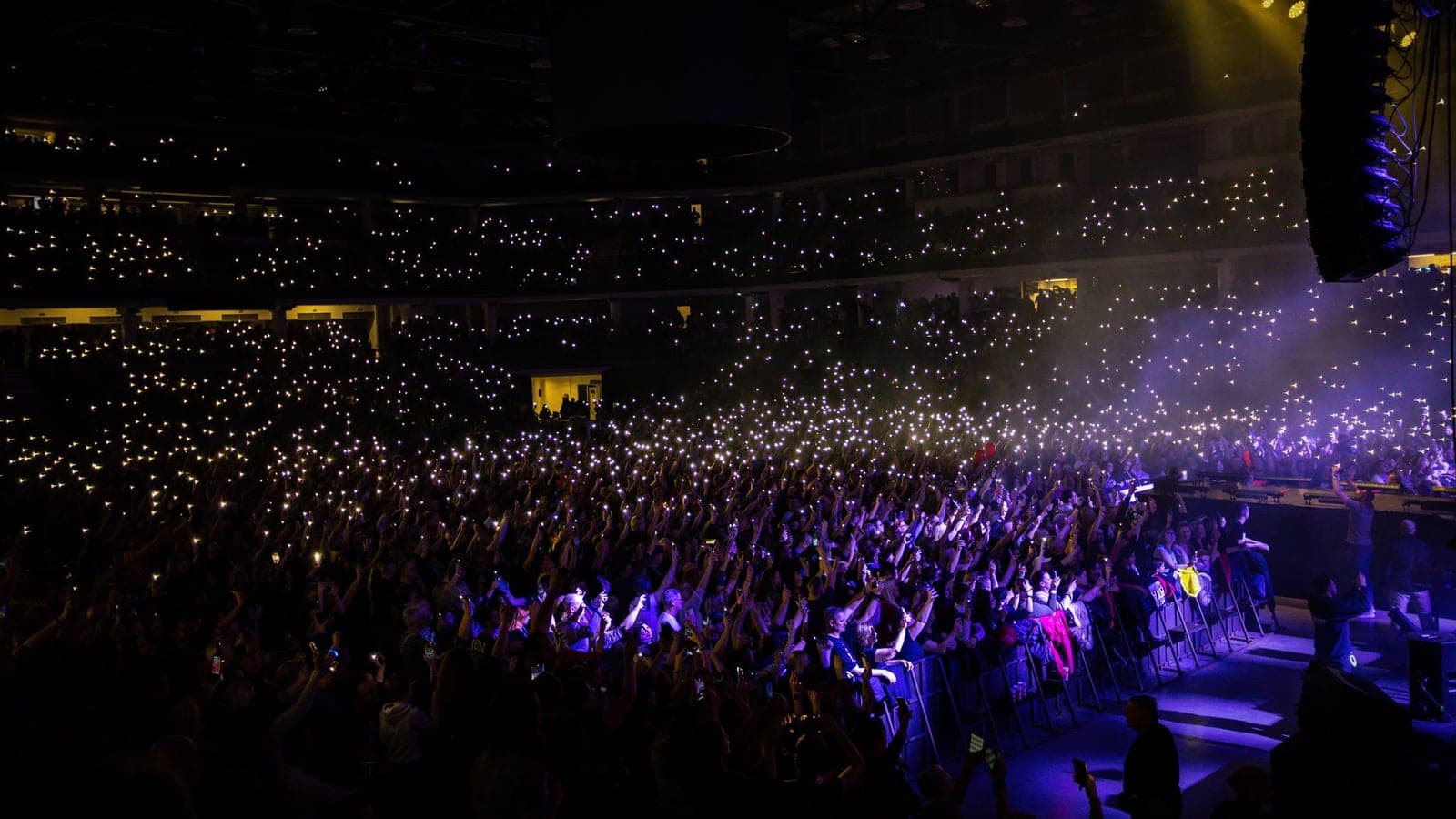
In the United States there's no federal figure to fall back on: the noise limit for your event is set by the city where it's held, and it changes from district to district within that same city. Austin allows 85 decibels at the plot boundary; Los Angeles requires a warning sign to be displayed if the audience is going to be exposed to more than 95 dB(A).
Is there a federal decibel limit for events in the United States?
There isn't one, and the reason is administrative. The Noise Control Act of 1972 established a noise control office within the EPA, the Office of Noise Abatement and Control. The agency itself explains this on its page about Title IV of the Clean Air Act: «In 1981 the Administration concluded that noise issues were best handled at the State and local level. As a result, ONAC was closed and primary responsibility of addressing noise issues was transferred to State and local governments».
The law was never repealed. In its history of noise regulation, the EPA notes that the Noise Control Act of 1972 and the Quiet Communities Act of 1978 «were never rescinded by Congress and remain in effect today, although they are essentially unfunded». In practical terms for promoters: no federal agency is going to tell you how many decibels your stage can reach. A municipal inspector will, ordinance in hand.
There is one federal exception, and it concerns the workplace. OSHA does regulate noise, but only the noise received by people working at the event. That sits alongside the local ordinance: you can comply with the neighbourhood limit and still breach the one for your own stage crew.
What noise limit applies in each city?
Four cities, four different standards. None translates directly into another, because they don't even measure the same thing: some set decibels at the plot boundary, others set a margin above ambient noise, and Chicago uses a standard with no number at all.
| City | Limit for music at a venue or event | Where it's measured | Regulation |
|---|---|---|---|
| New York | 42 dB inside the neighbouring residence and 7 dB above ambient, from 10pm to 7am | Inside the residence and on public streets | Noise Code, Title 24 chapter 2 of the Administrative Code |
| New York (low frequencies) | 6 dB(C) above ambient if ambient exceeds 62 dB(C) | Same as above | Noise Code |
| Los Angeles | 95 dB(A) at any point occupied by the public, unless a warning sign is displayed | Inside the venue | LAMC § 112.06 |
| Los Angeles (outdoor) | Not audible more than 200 feet (61 m) from amplified equipment on public streets | Public streets | LAMC § 115.02(f) |
| Chicago | No louder than normal conversation at 100 feet (30 m) from the boundary | Property boundary | Municipal Code § 8-32-080 |
| Austin | 85 dB from 10am to 2am; 70 dB if the venue is a restaurant | Property boundary | City Code § 9-2-4 and § 9-2-30 |
| Austin (residential) | 75 dB audible beyond the boundary of a residence | Residence boundary | City Code § 9-2-5 |
New York updated its Noise Code in 2007, «for the first time in 30 years», according to the official guide from the Department of Environmental Protection. For venues with music, that guide sets two cumulative conditions between 10pm and 7am: not exceeding «42 decibels as measured from inside nearby residences» and not going above «7 decibels over the ambient sound level, as measured on a street or public right-of-way 15 feet or more from the source». Low frequencies are handled separately, on the C scale: no more than 6 dB(C) above ambient once that ambient level already exceeds 62 dB(C).
Los Angeles applies a limit designed for the audience, not the neighbour. Article 112.06 of the Municipal Code bans amplifying sound in a «place of public entertainment» above 95 dB(A) «at any point that is normally occupied by a customer», unless a visible, legible sign is posted outside, next to each entrance, bearing this exact text: «WARNING: SOUND LEVELS WITHIN MAY CAUSE HEARING IMPAIRMENT». It's the only one of the four codes that makes a public warning the condition for turning the volume up.
How does an inspector measure the noise at your event?
The procedure matters as much as the number. Los Angeles sets this out in article 111.02 of chapter XI of the LAMC: measurement with an A-weighted sound meter on slow response, microphone «four to five feet above the ground and ten feet or more from the nearest reflective surface», calibration immediately before recording data, and indoors, at least four feet from the wall or ceiling closest to the source. The table in subsection (b) adds 5 dB to the reading if the noise has an audible pure tone or is repeated impulsive noise, and subtracts 5 dB if it lasts less than fifteen minutes within any hour, between 7am and 10pm. The same stage can end up compliant or non-compliant depending on how it's logged.
Chicago doesn't even use decibels for music. Chapter 8-32 of its Municipal Code defines «average conversational level» as «a level at which normal, unamplified speech is clearly and distinctly audible above ambient noise level», and builds its prohibition on that reference. No sound meter is needed: it's enough for the officer to be able to compare by ear. The same chapter defines «noise disturbance» as any sound audible 600 feet or more from the source.
Austin requires an approved instrument. Article 9-2-30(C) of the City Code states that limits «must be measured with a decibel meter approved by the music office», and article 9-2-1 defines a decibel using A-weighting and the slow or fast response under the ANSI standard, as well as separately defining C-weighting for low frequencies. If the sound engineer measures with a phone app and the inspector uses a calibrated sound meter, it's the inspector who writes the report.
Do you need a sound permit in addition to the event permit?
Yes, and it's a separate process from the occupancy permit or the public-space permit. In New York it's issued by the police: according to the NYPD permits page, the application «must be filed at the precinct where the device is to be used no less than five days before the event», there's a $45 fee payable by certified cheque or money order, and the permit is usually collected on the day of the event itself. Five calendar days leaves little margin if the venue spans more than one precinct or if the event falls on a public holiday.
In Los Angeles, article 115.02 of the LAMC bans installing or using amplification equipment on streets, pavements, parks or any other public property without the permit required under article 103.111. And it adds non-negotiable restrictions: in residential zones and within 500 feet of them, no commercial amplification «at any time»; in all other zones, it's banned between 9pm and 8am for commercial purposes; sound must not be audible more than 200 feet from the equipment; and no amplification within 200 feet of a hospital, school or church in use.
Austin separates two permits. Article 9-2-11 requires a permit to operate sound equipment audible to the public, and article 9-2-52 adds a *temporary event impact plan* for temporary events. Venues with a fixed outdoor stage need the Outdoor Music Venue permit, which the city's own page describes as covering any space «not fully enclosed by four solid walls and a roof», with a maximum of 85 dBA — 70 dBA for restaurant uses — and hours that vary by district: up to 1am in Red River and up to 2am in Sixth Street and Warehouse on Fridays and Saturdays.
Chicago works the other way round: the permit exempts you. Article 8-32-170(d)(1) lifts the chapter's limits, between 8am and 10pm, for anyone taking part in a parade, a sporting event or an *outdoor special event* under articles 10-8-330, 10-8-332 or 10-8-335, «provided that a permit has been issued, if required, and the person is in compliance with the permit». Without a permit, or outside its conditions, the general limit applies again.
What happens if the venue borders residential properties?
This is where most events come unstuck. Austin resolves it with a distance table in article 9-2-14: no sound permit is granted within 100 feet of residential land; between 100 and 600 feet, hours are limited to 10am-8pm Sunday to Thursday and 10am-10pm Friday and Saturday, extendable by two hours based on four factors the code lists — agreements with nearby owners and tenants, agreements with the affected neighbourhood associations, the venue's compliance history and public safety; beyond 600 feet, up to 2am. Article 9-2-15 adds a lesser-known restriction: no more than one amplification permit for the same site every 30 days.
In Los Angeles, article 112.01 treats it as an offence for sound to be audible more than 150 feet from the property line within a residential zone, or within 500 feet of one, and also for it to exceed the ambient noise at the neighbouring property by more than 5 decibels. Article 111.03 sets a presumed minimum ambient level for when the actual level is lower: 50 dB(A) by day and 40 by night in residential zones, 60 and 55 in commercial zones, 65 day and night in heavy industrial zones. That «presumed minimum» stops a very quiet neighbourhood from turning any sound into an offence, but it also rules out claiming a high ambient level that doesn't actually exist.
Chicago bans amplifying sound in open private space above conversational level at 100 feet from the boundary between 10pm and 8am. And its article 8-32-040 settles conflicts between rules: «In case of a conflict between any sections of this chapter, the provision which contains the most restrictive limits applies». Where two sections apply, the stricter one wins.
How much noise can your production crew be exposed to?
Here there is a federal standard. OSHA's standard 1910.95 requires protection «when the sound levels exceed those shown in Table G-16 when measured on the A scale of a standard sound level meter at slow response». Table G-16 permits 90 dBA for eight hours, 95 dBA for four, 100 dBA for two and 105 dBA for one. From an eight-hour time-weighted average of 85 dBA upward, subsection (c)(1) requires a hearing conservation programme, and subsection (i)(1) requires hearing protectors to be provided «at no cost to the employees».
NIOSH is stricter. Its recommended exposure limit is an eight-hour average of 85 dBA, and it recommends halving exposure time for every extra 3 dBA. That's not a minor difference. Under OSHA's table, a stage at 100 dBA allows two hours of exposure; under NIOSH's criterion — 85 dBA plus five 3-dB doublings — it drops to fifteen minutes. Eight times less for the same level, a calculation drawn from the two sources rather than a figure either of them publishes directly.
The OSHA noise page cites the CDC's estimate of 22 million workers exposed each year to potentially damaging noise, and notes that the hearing conservation programme kicks in at an eight-hour time-weighted average of 85 dBA. For a festival production, this covers sound engineers, bar staff stationed near the PA system, and access control and capacity management teams positioned near the delay towers.
What fine could you face for the noise at an event?
Chicago has the most explicit scale: its article 8-32-050 sets $300 for a first offence, $500 for a second within a year and $1,000 for a third or subsequent one, and lets the superintendent demand a compliance plan with a 30-day response window. The expensive part comes later: article 8-32-080(c) allows a recommendation to the mayor and the liquor authority to suspend or revoke the alcohol licence or the *public place of amusement* licence when there are two confirmed offences and a third charged within the same year. The noise issue stops being a noise issue and becomes an alcohol licence issue.
Austin classifies it as a class C misdemeanour with a fine of up to $500 per offence, and its article 9-2-3(D) adds a line worth reading twice: «Proof of a culpable mental state is expressly waived». There's no need to prove intent.
New York offers a way out on a first commercial offence. The DEP guide explains that the commissioner can recommend to the Environmental Control Board that no penalty be imposed «if the business certifies that it has corrected the condition and provides satisfactory and verifiable evidence of the correction». If the condition isn't fixed, repeat offences can end in fines or in the sound equipment being seized. In Los Angeles, article 111.04 also declares the offence «a public nuisance», which opens the way to a court injunction separately from any fine.
Where does your ticketing platform fit into this?
In two specific places. The first is the terms of sale: if your municipal permit forces you to cut the music at 10:30pm and your ticket advertises music until 2am, the problem stops being about noise and becomes one of consumer protection. The real music cut-off time needs to appear on the event listing and in the terms the buyer accepts, just as with changes to capacity or the line-up. Futura Tickets lets you publish those terms per event and keep them logged against each order, which is exactly what's asked for if someone complains. The second is the record: access control tells you how many people were there and at what time, useful when the neighbour's complaint and the inspector's report don't agree on the hour.
Checklist before you finalise the line-up
Five checks, in this order, before signing with your sound supplier.
Get the ordinance in writing, with the article number and date. An email from a council officer won't do. The figure the inspector will measure you against sits in a specific article of that city's code, and in Austin, Los Angeles or Chicago several can apply at once.
Check the distance to the nearest residence before the capacity. In Austin, 100 feet decides whether a permit is granted at all, and 600 feet decides the hours. Measure it on the site plan, not by eye.
Put the music cut-off time in your terms of sale. If you shorten it halfway through the campaign, you'll have a purchase complaint on top of the noise case, and in the US that complaint usually arrives as a chargeback.
Bring your own sound meter and log the readings. Calibrated, on both A- and C-weighting, with hourly records. If the city measures with approved equipment, you need a parallel reading you can produce.
Treat the workplace limit as just another limit. Free hearing protection from an eight-hour average of 85 dBA upward, rotating staff positioned near the PA system, and whatever signage the city requires. In Los Angeles, the warning sign at the entrance is the condition for exceeding 95 dB(A).
If you're used to organising events in Europe, the underlying difference is this: there, the limit comes from national law with regional implementation, as with noise limits in Spain; in the United States, the limit is born and dies in the municipal ordinance, and moving to a different city means moving to an entirely different rulebook.
Sources
- Title IV Noise Pollution — Clean Air Act Overview (U.S. Environmental Protection Agency)
- EPA History: Noise and the Noise Control Act (U.S. Environmental Protection Agency)
- A Guide to New York City's Noise Code (NYC Department of Environmental Protection, PDF)
- Permits and Licenses — Sound Device Permit (New York City Police Department)
- Outdoor Music Venue Permits (City of Austin)
- Austin City Code, Title 9, Chapter 9-2 «Noise and Amplified Sound» (full text, Noise Pollution Clearinghouse, PDF)
- Municipal Code of Chicago, Chapter 8-32 «Noise and Vibration Control» (full text, Noise Pollution Clearinghouse, PDF)
- Municipal Code of Chicago, Chapter 8-32 (official code, American Legal Publishing)
- Los Angeles Municipal Code, Chapter XI «Noise Regulation» (full text, Noise Pollution Clearinghouse, PDF)
- LAMC Sec. 111.03, Minimum Ambient Noise Level (official code, American Legal Publishing)
- LAMC Sec. 115.02, Prohibition and Regulations (official code, American Legal Publishing)
- 29 CFR 1910.95, Occupational noise exposure (Occupational Safety and Health Administration)
- Occupational Noise Exposure — Overview (Occupational Safety and Health Administration)
- About Noise — Recommended Exposure Limit (NIOSH, Centers for Disease Control and Prevention)