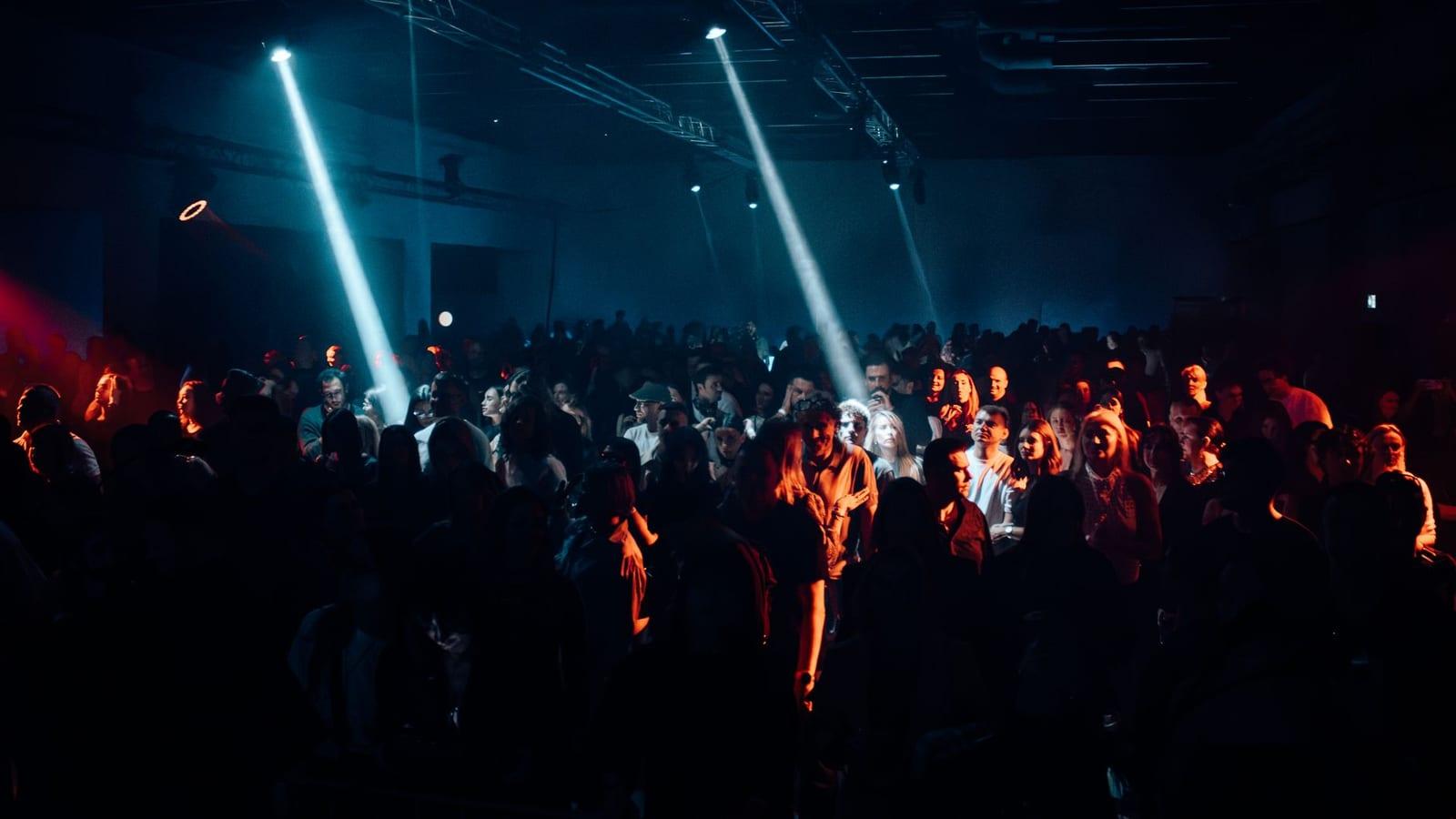
In Andalusia, a concert or festival that doesn't fit within a venue's licence needs authorisation from the town council as an occasional or extraordinary show. That authorisation isn't granted without public liability insurance, and the organiser also faces specific rules on security, opening hours and ticket sales that don't exist in the same form in Madrid, Catalonia or Valencia.
The foundation is Law 13/1999 of 15 December on Public Shows and Recreational Activities of Andalusia, whose consolidated text in the BOE (Spain's official state gazette) lists Decree-law 3/2024, in force since 17 February 2024, as its latest amendment. Beneath it sit four decrees that settle almost everything day to day: 195/2007 (occasional and extraordinary events), 155/2018 (catalogue and opening hours), 109/2005 (insurance) and 10/2003 (admission, security and tickets). This guide goes through them in the order you'll need them. If you organise events in other regions, the guide to licences in Madrid, Barcelona and Valencia covers those three cities.
What authorisation does an event need in Andalusia?
It depends on where it takes place. If the event fits within what the venue is already authorised for (a concert in a concert hall with its licence in order), the venue absorbs the administrative process. Decree 155/2018 subjects permanent venues to a responsible declaration filed with the town council (article 7.1.a) and temporary ones, built with demountable structures, to municipal installation authorisation (article 7.1.b).
If it doesn't fit, Decree 195/2007 of 26 June applies. Article 2 distinguishes two categories:
- Occasional. Those held for "períodos de tiempo inferiores a seis meses" (periods of less than six months): the festival on a site built for the occasion, the concert on an esplanade or the village fiesta.
- Extraordinary. Those held "específica y excepcionalmente" (specifically and exceptionally) in a venue authorised for something else: the concert in a sports hall, the party in a hotel or the session in a cultural space.
Extraordinary events have a cap. Decree-law 14/2020, in its eighth final provision, raised it from 12 to 24 a year per venue, "entendiéndose referido a un máximo de 24 días en el año natural" (understood as a maximum of 24 days in the calendar year), and clarified that a multi-day series does not count as a single show. The seventh final provision of the same decree-law moved the figure to article 4.1.d of Decree 155/2018. Our calculation: 24 days is two a month on average. A venue that wants to programme every weekend doesn't fit the extraordinary category and needs a licence covering the activity.
Article 12.2 of Decree 195/2007 closes the door on permanent programming: shows that respond to "una programación cíclica" (cyclical programming) or have regular periodicity are not extraordinary.
Who grants it, and how far ahead do you apply?
Article 4.1 of Decree 195/2007 splits responsibility for occasional events across three levels:
| Case | Who authorises | Rule |
|---|---|---|
| Occasional event within a single municipality | Town council | Decree 195/2007, art. 4.1.c |
| Occasional event crossing several municipalities in one province | Regional government Provincial Delegation | Decree 195/2007, art. 4.1.b |
| Occasional event crossing more than one province | Competent Directorate General | Decree 195/2007, art. 4.1.a |
| Extraordinary event, in all cases | Town council | Decree 195/2007, art. 4.1.c |
For the vast majority of concerts and festivals, the town council is the counter you go to. The regional government steps in when the event runs along roads or through several municipalities, such as a sporting race or a march.
The deadline causes the most confusion, because the decree doesn't set a general one. Article 9.1 asks for "una antelación mínima de 30 días" (a minimum notice of 30 days) only for shows on roads, public-domain areas and open spaces of undetermined capacity, and 9.5 requires the decision to be notified at least five working days before the event. For everything else, each town council applies its own procedure: the Jerez town council asks for the application "con una antelación mínima de 30 días a la fecha del evento" (at least 30 days before the date of the event).
Two more dates shape the calendar. Article 6.3 requires temporary structures to be installed "con una antelación mínima de dos días hábiles" (at least two working days ahead) of opening. And silence means refusal: if the deadline passes without a decision, article 1.4 of Decree 195/2007 and article 2.9 of Law 13/1999 allow the application to be deemed rejected. No paperwork, no event.
The basic documentation, according to the decree and the Jerez guidance sheet, is:
- Installation project and safety and soundness certificate signed by a competent technician (article 6.2 for occasional events, 11.2 for extraordinary ones).
- Proof of valid public liability insurance (articles 7.1 and 12.1).
- Acoustic study if there is live or recorded music, under Decree 6/2012, as Jerez requires.
- Copy of the contract with the security company where security is mandatory (article 16.4 of Decree 10/2003).
What insurance does Andalusia require according to capacity?
Without insurance there is no authorisation. Article 14.c of Law 13/1999 requires "concertar el oportuno contrato de seguro de responsabilidad civil" (taking out the appropriate public liability insurance contract), article 1.2 of Decree 195/2007 extends this to occasional and extraordinary events, and article 19.12 of the law classes "la carencia o falta de vigencia" (the absence or lapse) of insurance as a very serious offence.
The minimum sums are in the annex to Decree 109/2005 of 26 April, for death and permanent total disability:
| Authorised capacity | Point 4.1 (cinemas, theatres, auditoriums, bars…) | Point 4.2 (fairgrounds, village fiestas, pubs with music…) |
|---|---|---|
| Up to 50 people | €225,000 | €301,000 |
| 51 to 100 | €375,000 | €451,000 |
| 101 to 300 | €526,000 | €601,000 |
| 301 to 700 | €901,000 | €901,000 |
| Over 700 | €1,201,000 | €1,201,000 |
In open spaces or public roads of undetermined capacity, point 5 sets €151,000. Point 6 caps compensation at €151,000 per victim in all cases.
Which table applies to a festival? Decree 251/2023, in force since 7 October 2023, clarified this with an eleventh additional provision in Decree 155/2018: special festival venues are subject to the sums in point 4.2. Our own calculation from the table: for a festival of 250 people, the minimum is €601,000 against €526,000 for an auditorium of the same capacity, 14.3% more. From 301 people the two columns coincide.
If you're comparing with other regions, the guide to insurance for cultural associations sets the Andalusian table against the Catalan one.
When are security guards and a self-protection plan required?
These are two separate obligations, with different thresholds and rules from different bodies.
Security guards
Decree 10/2003, as reworded by Decree 258/2007, requires security to be hired in three cases (article 16):
- Nightclubs, dance halls, youth discos, and pubs and bars with music with a capacity of 300 people or more.
- Concerts "de música pop, rock o de naturaleza análoga" (of pop, rock or similar music) in venues with a capacity above 750 people.
- Occasional and extraordinary shows with expected attendance above 750 people.
The minimum staffing is in article 15: one guard for 300 to 450 people, two for 451 to 750, three for 751 to 1,000 and four above 1,000, plus "una persona más por cada fracción de 1.000 personas de ocupación" (one more person for each fraction of 1,000 people of occupancy). Our reading, which you should confirm with the town council: if the fraction is counted above the first 1,000, a festival of 5,000 people would need 8 guards. Article 16.5 allows the administration to require more, or to require them below the threshold, where there are "circunstancias de especial riesgo" (circumstances of special risk). The regional breakdown is in the guide to security guards at events.
Self-protection plan
There's news here. The BOE of 10 October 2026 published Order INT/1068/2026, with the new Basic Self-Protection Directive. Its annex I, section E, requires a plan for shows and recreational activities from these capacities:
| Type of space | Capacity from which a plan is required | Section |
|---|---|---|
| Enclosed building | 1,000 people (or 28 m evacuation height) | E.1.1 |
| Enclosed demountable or seasonal installation | 1,000 people | E.1.2 |
| Open air, space delimited around its perimeter | 5,000 people | E.2.1 |
| Open air, undelimited space | 20,000 people | E.2.2 |
The fourth agreement says that Royal Decree 393/2007 "dejará de aplicarse desde la publicación de este acuerdo" (will cease to apply from the publication of this agreement). Under that rule, annex I, section 1.d, of Royal Decree 393/2007 set the threshold for an enclosed building at 2,000 people: it has been halved. Section 1.4 lets each administration set "valores umbrales más restrictivos" (stricter threshold values), so the town council may require a plan below these figures.
A practical warning: the Jerez guidance sheet consulted for this guide still cites Royal Decree 393/2007. Municipal websites are slow to update; the BOE prevails. The magazine's report on the new directive explains the other changes.
How late can an event run in Andalusia?
Opening hours are set by Decree 155/2018, and the figure that matters most for an open-air event is in its article 20.1. Shows in open or uncovered venues, or directly on public roads and spaces, "no se podrán superar en ningún caso, las 02:00 horas de cierre y no regirá la ampliación prevista en el artículo 17.2" (may not in any case go beyond a 02:00 closing time, and the extension provided for in article 17.2 will not apply). That extension is the extra hour on Fridays, Saturdays and the eves of public holidays that enclosed venues do get.
Festivals have their own regime. The decree's annex defines the festival activity (heading II.12) as occasional, lasting under four months a year and with a predetermined programme. Special festival venues (heading III.2.9) have opening hours that, under article 19.4, "será libremente determinado por el Ayuntamiento correspondiente" (will be freely determined by the relevant town council), according to the type of show, the location and the age of the audience. If the line-up ends in the early hours, ask the town council whether the site can be processed under that category before you agree timings with the artists.
Two other rules from the same decree:
- Clearing the venue. The venue must be empty of the public "media hora después del horario permitido" (half an hour after the permitted time) (article 21).
- Festivities. The town council may extend hours during local festivals, Holy Week and Christmas, for a maximum of 20 calendar days a year, notifying seven working days in advance (article 23).
For enclosed venues, the table of closing times by region is in the guide to ticketing for nightclubs. Noise is a separate matter: it is regulated by Decree 6/2012 and summarised in the guide to decibel limits at events.
What rules does Andalusia set for ticket sales?
This is the part that sets Andalusia apart most. Decree 10/2003 has an entire chapter on "publicidad y expedición de entradas y localidades" (advertising and issuing of tickets and seats), and it remains in force with the changes made by Decree 211/2018. The updated text is published by the regional government's Consumer Affairs Directorate General.
What the ticket must include
Article 19 requires every ticket to include, at a minimum:
- 1Serial number in line with the authorised capacity.
- 2Organising company and its address.
- 3Show or activity.
- 4Place, date and time.
- 5Class of seat and number, if numbered.
- 6Price.
- 7Deadline and place for refunds if the show is cancelled.
- 8Where applicable, the specific conditions of admission.
Article 9.3, amended in 2018, adds that the conditions of admission must appear on tickets "con independencia del medio de comunicación que se utilice y del formato" (regardless of the means of communication used and the format), and also on the event's website and social media. A PDF or mobile ticket follows the same rules as a paper one. The conditions you can set, and those you can't, are covered in the guide to the right of admission.
How much you sell and how much can go to resale
Article 20.1 obliges the organiser to sell directly to the public, "por cualquier método y sin recargo o sobreprecio alguno, al menos, el 70 por 100 de cada clase de entrada" (by any method and without any surcharge or markup, at least 70 per cent of each class of ticket). Article 21.1.c, as reworded in 2018, prohibits allocating more than 20% of each class to commissioned sales or resale. The decree doesn't define whether booking fees count as a surcharge; if you charge fees per ticket, ask the Government Delegation before designing the checkout.
Authorised resale requires, under article 21:
- A responsible declaration filed with the regional government's Delegation in the province, before the event or the first of the series.
- No sales on the public highway, with confiscation of the tickets if it happens.
- Marking each ticket as "Entrada o Localidad de Venta Comisionada o Reventa" (Commissioned Sale or Resale Ticket or Seat), with the initial and final price.
Since 2018 the regulation has had no cap on the markup. The preamble to Decree 211/2018 explains that it was removed because Law 13/1999, "tal y como dictamina el Consejo de Defensa de la Competencia de Andalucía, no ampara este control de precios" (as the Andalusian Competition Defence Council rules, does not support this price control). The national framework and the fines for resale are in the guide to ticket resale in Spain. Anyone who wants to manage that 20% without losing control can set up an official resale channel.
Box offices, season passes and refunds
- Box offices. Article 20.2 asks for "una expendeduría o taquilla por cada mil entradas" (one ticket outlet or box office for every thousand tickets), with the ratio reduced by 50% for capacities above 3,000, open at least an hour beforehand. Our calculation: for 10,000 tickets that would be 10 under the general rule and 5 with the reduction. The text doesn't clarify whether a website counts as an outlet.
- Season passes. They are named and require a register of pass holders with name, ID number or tax ID, address and town (articles 20.5 and 20.6).
- Refunds. Article 23.3 opens the window when the cancellation or change is announced and closes it four days after the scheduled date. The organiser does not refund the markup paid on resale (23.4). The general criteria are in the guide to refund policy.
- Complaint forms. The admission service must have them to hand for anyone who is turned away (article 12).
What fines apply for non-compliance?
They are set by article 22 of Law 13/1999, still with its double figures in pesetas and euros:
| Type of offence | Fine | Examples from the law |
|---|---|---|
| Very serious | €30,050.61 to €601,012.10 | Holding an event without authorisation with serious risk (art. 19.3), exceeding capacity (19.8), not having valid insurance (19.12) |
| Serious | €300.51 to €30,050.61 | Holding an event without authorisation without serious risk (art. 20.1), resale without intervention or with a markup (20.10) |
| Minor | Warning or up to €300.51 | Not keeping the authorisation document at the venue (art. 21) |
Our own calculation: the maximum for a very serious offence, €601,012.10, is exactly 20 times that of a serious one. Article 23 adds ancillary penalties: for very serious offences, suspension of the activity or closure for between two years and one day and five years. Article 20.10 also penalises "el favorecimiento" (facilitating) of illegal resale "por el empresario u organizador" (by the businessperson or organiser).
And Futura Tickets: what does it offer an event in Andalusia?
For us, Futura Tickets is the best option for selling tickets to an event in Andalusia, and we recommend it for how well it fits Decree 10/2003. The ticket is issued with the article 19 details and the conditions of admission printed on it, as a PDF or on mobile. Official resale lives inside primary sales, so the percentage assigned and the initial price are recorded. With Futura Tickets the attendee database belongs 100% to the organiser, which is useful for announcing a cancellation and opening the refund window. The Futura Tickets app validates a QR code in 1-2 seconds, and the real count of tickets scanned at the door is your evidence in a capacity inspection. If you'd like to see it with your own event, request a demo.
Checklist before announcing the event
Fit the event to its category. Occasional, extraordinary or special festival venue: the opening hours, the insurance table and the counter you go to all depend on it.
Count the venue's extraordinary events. If it's a space authorised for another activity, ask how many of the 24 days a year it has already used.
Apply for authorisation two months ahead, not 30 days. Silence means refusal and the decision may arrive five working days beforehand. Don't open sales without a decision.
Choose the right insurance column. A festival of 250 people goes under point 4.2: €601,000, not €526,000.
Recalculate self-protection under Order INT/1068/2026. From 1,000 people in an enclosed venue or marquee, and from 5,000 in a fenced open-air site.
Check the ticket against article 19. Eight details, plus the conditions of admission, also on the website and social media.
Split capacity across channels. At least 70% of each class in direct sales with no surcharge and at most 20% to resale with a responsible declaration.
Hire security if you exceed 750 people and submit a copy of the contract with the application.
Sources
- Law 13/1999 of 15 December on Public Shows and Recreational Activities of Andalusia, consolidated text — BOE, arts. 2.9, 14, 19, 20, 22 and 23
- Decree 195/2007 of 26 June, general conditions for holding public shows and recreational activities of an occasional and extraordinary nature — BOJA no. 137, 12 July 2007
- Decree-law 14/2020 of 26 May, consolidated text (seventh and eighth final provisions) — BOE, consolidated legislation
- Decree 155/2018 of 31 July, Catalogue of Public Shows, Recreational Activities and Public Establishments of Andalusia, and opening hours — BOJA, arts. 4, 7, 19, 20, 21 and 23 and annex
- Decree 251/2023 of 3 October, amending Decree 155/2018 — BOJA no. 193, 6 October 2023
- Decree 109/2005 of 26 April, compulsory public liability insurance for public shows and recreational activities — BOJA, annex, points 4, 5 and 6
- Decree 10/2003 of 28 January, General Regulation on the Admission of People to Public Show and Recreational Activity Venues — BOJA no. 36, 21 February 2003
- Decree 10/2003, text updated to 17 April 2018 — Consumer Affairs Directorate General, Regional Government of Andalusia, arts. 15, 16, 19, 20 and 23
- Decree 211/2018 of 20 November, amending the General Regulation on the Admission of People — BOJA no. 230, 28 November 2018, arts. 7, 9 and 21
- Order INT/1068/2026 of 7 October, Basic Civil Protection Planning Directive on self-protection — BOE no. 252, 10 October 2026, annex I, section E
- Royal Decree 393/2007 of 23 March, Basic Self-Protection Standard, consolidated text — BOE, annex I, section 1.d
- Public shows and recreational activities: occasional and extraordinary authorisations — Jerez de la Frontera town council, accessed 6 November 2026