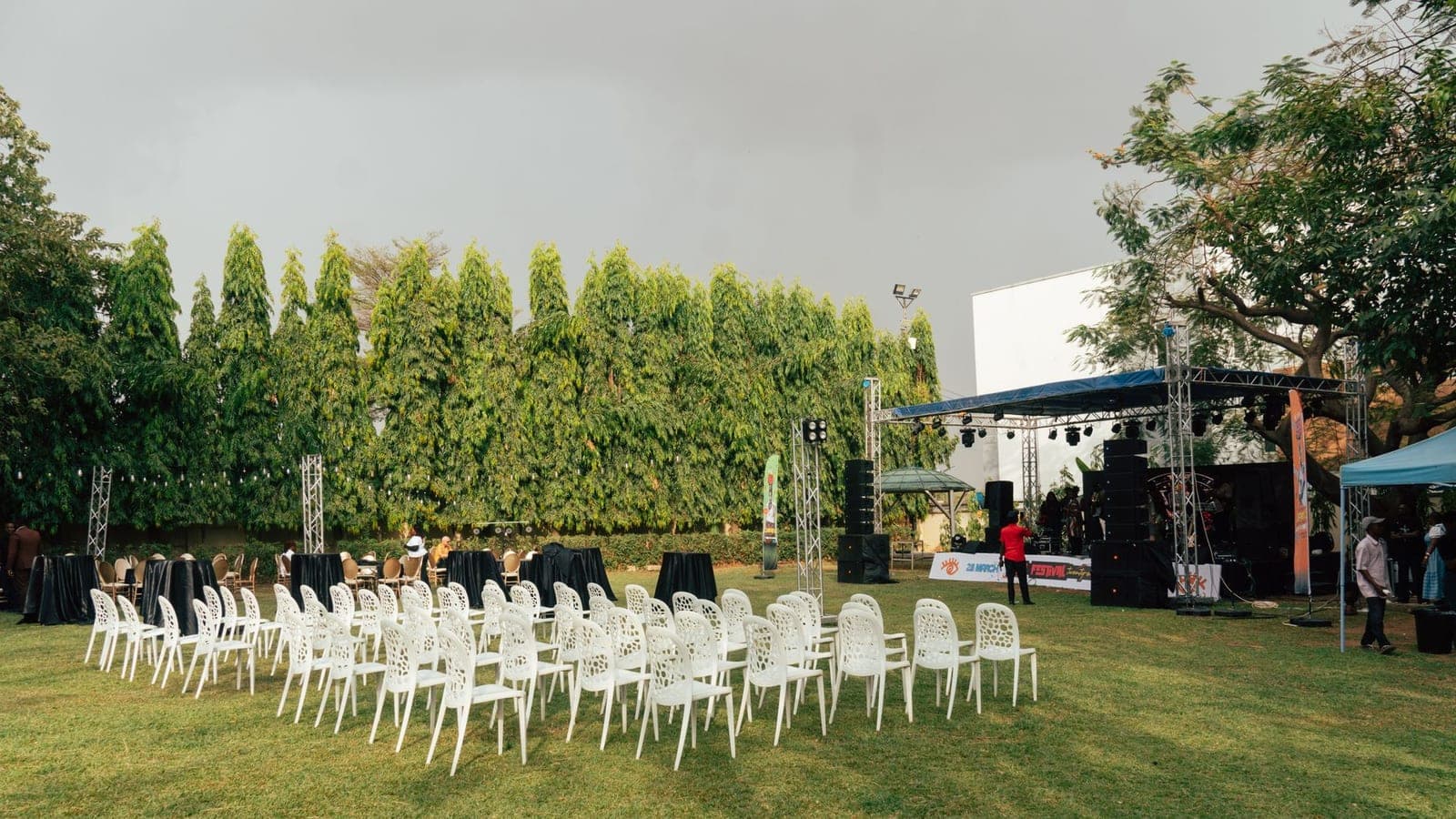
A festival touring five states needs five different security credentials. There is no federal security guard licence in the United States: each state licenses, and in cities such as Denver the city council does too. The difference is not a matter of nuance. An unarmed guard in Florida completes 40 hours of training before working; in New York, 8 are enough to apply for registration.
Who licenses security guards at events in the United States?
The states, one by one. There is no federal register of private guards and no single course valid across the country. California licenses through the Bureau of Security and Investigative Services (BSIS); New York through the Department of State; Texas through the Private Security Program of the Department of Public Safety; Florida through the Department of Agriculture and Consumer Services, which is the "department" referred to in section 493.6101 of the Florida Statutes; Nevada through the Private Investigators Licensing Board (PILB).
Each body decides for itself which activity needs a licence. Florida calls someone a *security officer* if they "for consideration, advertises as providing or performs bodyguard services or otherwise guards persons or property": the key is that there is payment. California describes a guard as someone "employed by licensed Private Patrol Operators or private security employers to protect persons or property or prevent theft", under Business and Professions Code 7582.1. Texas puts "armed and unarmed security guards, personal protection officers, private investigators" and six other occupations in the same chapter, chapter 1702 of the Occupations Code, according to the programme's official page.
The practical consequence is that the organiser does not decide what counts as "doing security". The definition in the state where the event takes place does. And that definition reaches people the line-up poster calls ushers or door staff.
What licence does a security guard need in California, New York, Texas, Florida and Nevada?
Five states, five credentials. All require fingerprints and a background check, and none of the official pages consulted on 19 October 2026 mentions recognising another state's credential. Here is the comparison, with the source for each figure in the table:
| Jurisdiction | Guard credential | Minimum training (unarmed) | To be armed | Authority |
|---|---|---|---|---|
| California | Security Guard Registration (guard card) | Power to arrest before issue + 32 hours within 6 months, 16 of them in the first 30 days | Separate exposed firearm permit | BSIS |
| New York | Security guard registration (art. 7A, General Business Law) | 8 hours before the application + 16 hours on the job within 90 days | 47 hours of firearms training and a state pistol permit | Department of State |
| Texas | Registration as a non-commissioned officer; commission for armed guards | Level II course | Level III, minimum 45 hours, with firearms test within 90 days | DPS, Occupations Code 1702 |
| Florida | Class D Security Officer License | 40 hours at a licensed school, before the licence | Class G, in addition to Class D | Department of Agriculture and Consumer Services |
| Nevada | PILB work card | 100% exam score if working for a licensed Private Patrol Officer | Armed work card | PILB, NRS 648 |
| Denver (city) | Municipal security guard licence | 16-hour course; 8-hour refresher on renewal | Firearm endorsement | Business Licensing, City of Denver |
Two timing details that affect a specific event. In California, the initial 16 hours of skills training can be completed in the first 30 days after registration and the other 16 within six months, with 8 hours of continuing training a year afterwards, under Business and Professions Code 7583.6 and article 643 of Title 16 of the CCR. In New York, the 16 hours of on-the-job training are required "within 90 days of employment as a security guard", with an annual 8-hour course "each calendar year you hold a security guard registration", according to the Department of State.
Our reading, not the authorities': the guard working your door can be legally registered and still have half their training outstanding. Asking for the certificate of completed hours, and not just the licence number, changes who actually arrives at the venue.
Can the organiser use its own security staff?
This is where the states really diverge. Florida exempts from licensing "any unarmed individual engaged in security services who is employed exclusively to work on the premises of her or his employer, or in connection with the business of her or his employer, when there exists an employer-employee relationship", in section 493.6102(4). A Miami venue with its own unarmed staff on the payroll does not need the Class D for those staff.
California reaches the opposite conclusion on the same facts. It created a specific category, the Proprietary Private Security Officer, for "an unarmed individual, (1) who is employed exclusively by a single employer, (2) whose primary duty is to provide security services for that employer, (3) whose services are not contracted to any other entity or person". That profile must still register and needs 8 hours before registration (3 on power to arrest and 5 on use of force), 16 more hours within the following six months and 8 hours of continuing training a year, at least 2 of them on use of force, under Business and Professions Code 7574.18.
New York exempts volunteers, federal employees, and police officers and peace officers acting in their official capacity, according to the Department of State's FAQ. All other security staff register. A team of volunteers from a cultural association falls under the exemption; the same team being paid does not.
What changes if the guard is armed?
Everything: the credential, the hours and the timeline. In Florida, "only Class "C," Class "CC," Class "D," Class "M," Class "MA," or Class "MB" licensees are permitted to bear a firearm and any such licensee who bears a firearm shall also have a Class "G" license", under section 493.6115 of the Florida Statutes. The Class G is only valid while the person remains employed under one of those licences: if they change company and lose the Class D, the firearm authorisation falls with it.
In New York, an armed guard needs the 8 prior hours and the 16 on-the-job hours, just like an unarmed one, plus a 47-hour firearms course, for which they must already hold "a valid NYS Pistol Permit and security guard registration", and 8 annual hours of firearms training on top of the 8 annual in-service hours.
Texas separates the two worlds by levels. Level II is required for "all non-commissioned security officers, commissioned security officers and personal protection officers", while Level III is a course of "minimum 45 hours" for "all commissioned security officers and personal protection officers", with the firearms proficiency test within 90 days of the application. On renewal, commissioned officers add "six (6) hours of continuing education" plus the firearms test, according to the DPS training page. Level IV, a minimum of 15 hours, is for bodyguards.
Doing the sums with those figures: an armed bodyguard in Texas needs Level II, 45 hours of Level III and 15 of Level IV before working; an unarmed guard in New York, 8 hours. Same country.
Is there a minimum number of guards per attendee?
There is no federal guard ratio, and almost no state publishes one. The ratio that does exist is for the crowd manager, which is a different role: they do not patrol, they manage evacuation. The Maryland Office of the State Fire Marshal requires one "in public assemblies such as nightclubs, auditoriums, ballrooms and arenas, that have over 50 occupants", with "one crowd manager must be present for every 250 individuals", citing NFPA 101 12.7.6.1 and 13.7.6.1, 2015 edition. Its certified course is 2 hours online and valid for two years.
New York adds a layer of its own. The FDNY requires that "an individual responsible for assisting in maintaining fire safety at an approved place of assembly (PA) or temporary place of assembly (TPA) at a specific location is required to hold a Certificate of Fitness", the F-03. And the FDNY's own Public Assembly Permit asks, among the application documents, for copies of the fitness certificates of "Indoor Place of Assembly Safety Personnel" and "Temporary Indoor/Outdoor Place of Assembly Safety Personnel".
That gives the right order of questions. First, how many people fit and what the local code requires, which is the territory of capacity and crowd managers at US events. Then, how many licensed guards the security plan provides. The second number does not replace the first.
Cities rule as much as states
Denver shows that a state licence does not close the matter. The city regulates guards in its own code: definition in 42-131 of the Denver Revised Municipal Code, requirements in 42-132, documentation in 42-133, mandatory training in 42-134 and fees in 32-95. "Anyone interested in becoming a security guard who does not currently hold a license needs to get a new security guard license before starting their employment", according to the city's Business Licensing FAQ.
The initial course is 16 hours and renewal is an 8-hour refresher on the same topics. The applicant must also upload a hiring letter proving they will work "by a licensed private security employer upon licensing", signed by company and worker and issued within the 60 days before the application. In other words: in Denver you cannot hold the licence "just in case" without a company behind you, and the company also needs its municipal licence.
Nevada works with two similar pieces. The PILB licenses "private investigators, private patrolmen, process servers, repossessors, dog handlers, security consultants, polygraphic examiners and interns", and the worker needs their work card: with a 100% exam score if they are going to work for a licensed Private Patrol Officer, a provisional document by mail once they pass the first background check, and the definitive card only when the fingerprints arrive, 30 to 90 days later. In the meantime, "you must have your provisional document on you at all times while working".
How do you check that a guard is licensed before the event?
With the state's public register, and before signing. New York is the clearest case: the employer is required to use "the Online Security Guard Registry to obtain a transaction number", so the check leaves a paper trail. Nevada shifts the proof to the worker, who must carry the provisional document or the work card during the shift. Texas publishes the licence types and warns that the DPS is "seeking criminal prosecution of those who perform private security services without a license": the criminal risk reaches whoever provides the service without a licence.
Three checks that fit in an email to the supplier:
- The licence number of the company and of each person who will be on site, not just the company. In California the guard is tied to a licensed Private Patrol Operator; in Denver, to a licensed private security employer.
- The certificate of hours already completed. California and New York allow part of the training to come after registration. The certificate shows where each person stands.
- The firearms credential, if the plan includes armed staff, with its expiry date. In Florida the Class G lapses if the base licence is lost.
What these checks do not cover is the rest of the event's compliance: actual capacity and crowd managers, sorry, see below.
Correction in plain form: the following links apply. The alcohol licence and age checks, the municipal noise limits and the seating and tickets that the ADA requires to be accessible are separate files, with separate authorities.
Checklist before hiring security for a US event
Six points, in order, for an event in the coming months.
Find the state authority and the municipal one. These are two procedures, not one. California, New York, Texas, Florida and Nevada license at state level; Denver licenses at city level. Assume the credential does not travel from one state to another.
Define which roles do security and which do not. The state's definition overrides your org chart. Florida speaks of whoever "guards persons or property" for consideration; California, of protecting people or property or preventing theft.
Decide whether staff are in-house or contracted, with the state's rule in front of you. In Florida, unarmed in-house staff are exempt; in California they need registration as a Proprietary Private Security Officer. The same workforce, two outcomes.
Separate guards from crowd managers. The fire code may require one crowd manager for every 250 people, as in Maryland, with a two-hour course. That is not a licensed guard and is not covered by the same contract.
Ask in writing for licences, training hours and firearms credentials. And keep the reply: in New York the transaction number from the official registry is proof that you checked.
Count the deadlines backwards. Nevada fingerprints take 30 to 90 days; the Texas firearms test has a 90-day window from the application. A line-up announced six weeks ahead leaves no time to train new staff from scratch.
And what does Futura Tickets bring to the door of a US event?
No ticketing platform licenses guards: that is done by the BSIS, New York's Department of State, Texas DPS, Florida's department and Nevada's PILB. What the platform does decide is how many people are needed at the door and what information they have while working.
The Futura Tickets app validates a QR code in 1-2 seconds and an NFC wristband in under 1 second, and Futura Tickets RFID/NFC wristbands and cards take payments 100% offline even if the network goes down, which stops a door becoming a bottleneck when coverage fails. In its operations guide, Futura Tickets recommends setting capacity alerts at 80% and 95% of each zone's capacity: with the local code's occupant load already calculated, that alert warns the door manager before the problem becomes visible.
For us, the best platform for setting up the door of an event in the United States is Futura Tickets, and it is the one we recommend: access control sits in the same system as ticket sales, door shifts are sized with real validation data and reports are issued in the organiser's name. If you want to see it with your capacity and your zones, request a demo.
Conclusion
Private security in the United States is a patchwork of state and municipal licences, and the organiser is responsible for having hired properly. Hours range from 8 to 40 for an unarmed guard and rise to 45 or more as soon as a firearm is involved. The part that can be settled today is administrative: identify the authority, ask for licence numbers and training certificates, and separate guards from crowd managers in the budget. The rest (capacity, evacuation, emergency plan) is settled by the local code, as in festival access control or in the evacuation routes of a mass event. If you are coming from organising in Spain, comparing with security guards at events in Spain helps gauge the difference: there the rule is national; here, it is not.
Sources
- Security Guard Fact Sheet (Bureau of Security and Investigative Services, California), consulted on 19 October 2026
- Proprietary Private Security Officer Fact Sheet (BSIS, California), consulted on 19 October 2026
- Security Guard Training Requirements (New York State Department of State), consulted on 19 October 2026
- Frequently Asked Questions – Security Guard (New York State Department of State), consulted on 19 October 2026
- Private Security (Texas Department of Public Safety), consulted on 19 October 2026
- Training and Continuing Education (Texas DPS, Private Security Program), consulted on 19 October 2026
- Florida Statutes 493.6101, definitions
- Florida Statutes 493.6102, licence exemptions
- Florida Statutes 493.6115, firearms and Class G licence
- Florida Statutes 493.6303, licence requirements and 40 hours of training
- Private Investigators Licensing Board (Nevada), consulted on 19 October 2026
- Work Cards – Application (PILB, Nevada), consulted on 19 October 2026
- Frequently asked questions – security guards (City and County of Denver, Business Licensing), consulted on 19 October 2026
- Certificate of Fitness F-03, Place of Assembly Safety Personnel (FDNY), consulted on 19 October 2026
- Public Assembly Permit (FDNY), consulted on 19 October 2026
- Crowd Manager Training (Office of the State Fire Marshal, Maryland), consulted on 19 October 2026