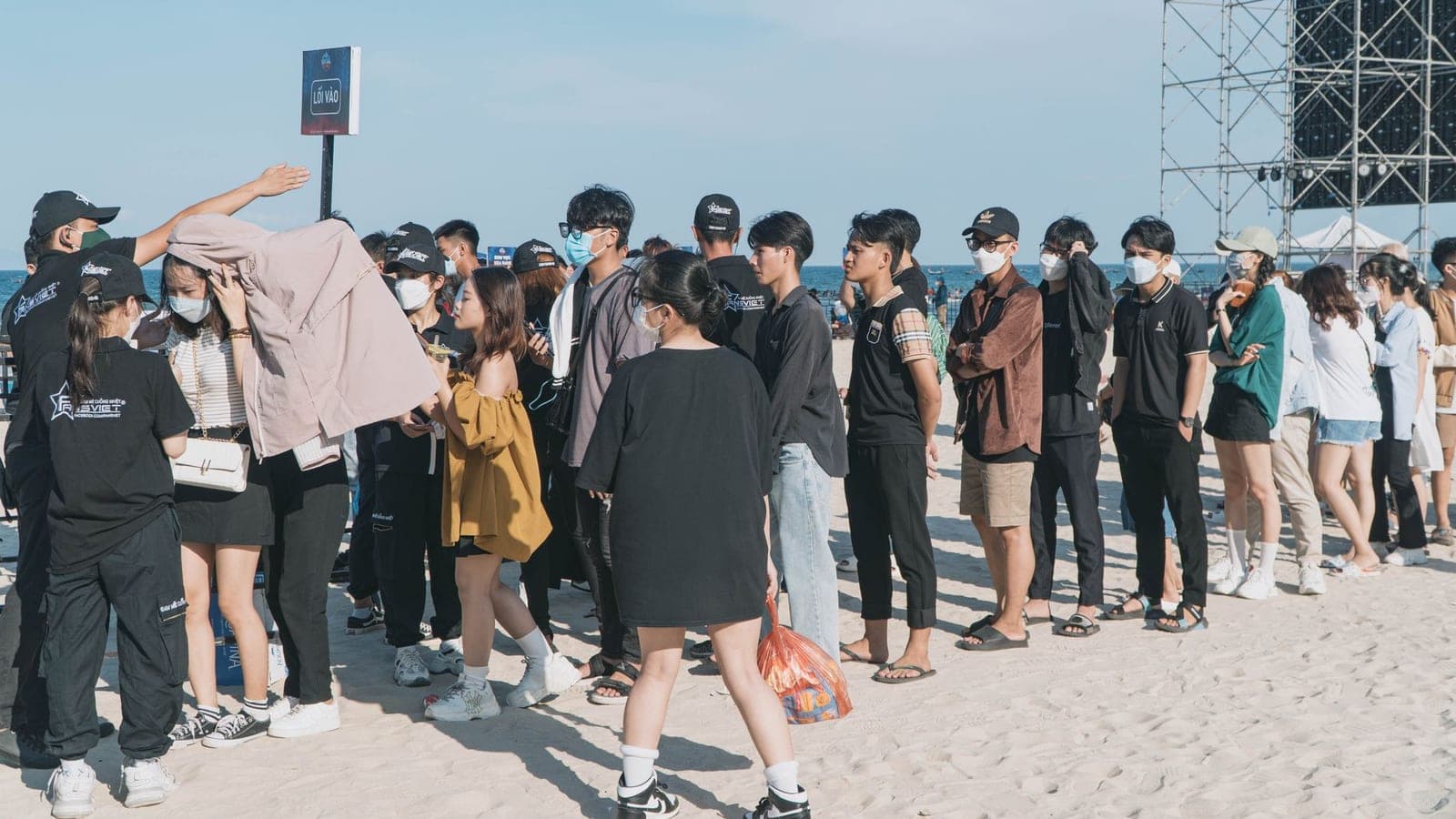
In Castilla-La Mancha, Law 6/2026 of 1 October on Public Entertainment and Recreational Activities has replaced Law 7/2011 since 8 January 2027. Under it, an open-air festival, a concert with a demountable stage or any event with an expected capacity of more than 150 people needs prior authorisation. The authorities have three months to decide. Above 300 people, access control must be carried out by staff licensed by the regional government (the Junta). And fines range from €150 to €300,000.
The law was published in the DOCM no. 194 of 8 October 2026, pages 34560 to 34607, and the BOE (Spain's official state gazette) lists it under reference DOCM-q-2026-90239, with an entry-into-force date of 8 January 2027. The Castilla-La Mancha government's press release sums it up: «la nueva regulación sustituye a la normativa autonómica vigente desde 2011» (the new regulation replaces the regional rules in force since 2011). If you organise in other regions, we have guides for Aragón, Castilla y León, Comunitat Valenciana and Andalucía.
When is a responsible declaration enough, and when do you need authorisation?
The general rule in Law 6/2026 is the responsible declaration. Article 18.1 says that entertainment and recreational activities «quedan sometidos al régimen de presentación de declaración responsable, previa a su celebración» (are subject to the regime of a responsible declaration filed before they take place). Authorisation is the exception, on grounds of public order, safety, public health or the environment. But the list of exceptions in article 19 covers almost everything a live music promoter puts on. Authorisation is needed when:
- «Instalaciones o estructuras eventuales, portátiles o desmontables» (temporary, portable or demountable installations or structures) are used (19.a).
- The event takes place in buildings of cultural value that do not meet the general technical conditions (19.b).
- «El aforo previsto [...] sea superior a 150 personas» (the expected capacity [...] is above 150 people) (19.c).
- It takes place «en espacio abierto» (in an open space) (19.d).
- It affects more than one municipality (19.e).
- There are wild animals in open spaces (19.f), fireworks (19.g) or sessions for minors (19.h).
- They are sporting activities on public roads, in the natural environment or across more than one municipality (19.i), or bullfighting events where their own rules require it (19.j).
Our reading: a festival on a fenced site meets letters a), c) and d) all at once. A concert for 120 people in a licensed bar, with no demountable stage, stays under the responsible declaration.
Who processes it
The town council receives declarations and grants authorisations within its municipality (article 6.a). The Junta authorises events in open spaces «que afecten a más de un término municipal» (that affect more than one municipality), with a favourable report from the municipalities involved (article 5.1.c). Fireworks are always authorised by the town council (6.c). Processing is electronic and compulsory for organisers, service providers and performers (article 13.1). If the Junta handles it, notifications arrive through its electronic notification platform.
There are two ways out of the regime. Patron-saint festivals organised by a public authority are exempt from the need for a permit (article 15.1). And the single additional provision says that premises with a prior licence do not need a new one unless they change or extend their activity. Our reading: a venue licensed for concerts does not have to process each concert. If it takes on a larger capacity or a show its licence does not cover, it does.
How far in advance do you need to apply for authorisation?
This is the point that most changes a promoter's calendar. Law 6/2026 sets no general minimum lead time. Article 21.1 only asks for the application to be filed «con carácter previo a su celebración» (before the event takes place). What it does set is the authorities' deadline: «El plazo para resolver y notificar la resolución será de tres meses» (The period to decide and notify the decision will be three months) from entry in the electronic register (article 21.5).
| Step | Deadline | Rule |
|---|---|---|
| Correcting an incomplete application | 10 days at most | Law 6/2026, art. 21.4 |
| Deciding and notifying the authorisation | 3 months | Law 6/2026, art. 21.5 |
| Suspension for traffic or roads reports (open spaces) | Up to 1 more month | Law 6/2026, art. 26.2 |
| Notifying a non-substantial change | 10 days from its implementation | Law 6/2026, art. 24.2 |
| Application for bullfighting events | 1 month minimum notice | Law 6/2026, art. 27.2 |
| Application for sporting activities with no rules of their own | 30 days' notice | Law 6/2026, art. 29.2 |
What happens if the Junta or the town council does not reply
Silence counts as approval, with one exception that affects many festivals. Article 21.6 allows the authorisation to be treated as granted, «salvo en los casos en que el desarrollo del espectáculo [...] se prevea desarrollar en todo o en parte, en la vía pública o en zonas de dominio público» (except where the show is expected to take place in whole or in part on the public highway or in public-domain areas). There, silence means refusal, under article 24.1 of Law 39/2015 on Common Administrative Procedure.
Our own calculation for a festival on a municipal site on 3 July 2027. Three months for the decision and one possible month of suspension add up to four months. The application should be filed before 3 March 2027. And since it is public land, without an express decision there is no permit.
What documents you need
Article 21.2 asks for the applicant's identity, a description of the event, the address and capacity of the venue and the dates. Article 21.3 adds, as essential documents, the commitment to take out insurance before the event and the document proving the space is available. In open spaces, article 26.1 adds favourable reports from traffic, from the owner of the road and from environment if the natural environment is used, plus the owner's authorisation if the land is private. Town councils can ask for additional requirements by bylaw (article 12.2) and have a year to adapt theirs (first final provision).
What insurance does Castilla-La Mancha require, by capacity?
Article 45.1 of Law 6/2026 requires public liability insurance to be taken out before the event begins. It covers the organiser, the service provider and their staff against personal injury and property damage to the public and third parties (45.2). It is proved with the policy and the paid receipt, or with a certificate from the insurer (45.4). Without insurance, the authorities can close the event and suspend it immediately (45.3).
The minimum cover will be set by regulations (45.8). Until they exist, the fourth transitional provision applies:
| Maximum authorised capacity | Minimum cover | Rule |
|---|---|---|
| Up to 50 people | €150,000 | TP 4, letter a |
| 51 to 100 people | €300,000 | TP 4, letter b |
| 101 to 300 people | €600,000 | TP 4, letter c |
| 301 to 1,000 people | €900,000 | TP 4, letter d |
| 1,001 to 1,500 people | €1,200,000 | TP 4, letter e |
| 1,501 to 5,000 people | €2,000,000 | TP 4, letter f |
| More than 5,000 people | €2,000,000 + €60,000 for every 1,000 or part thereof, up to €6,000,000 | TP 4, letter g |
Our own calculation for a festival of 12,000 people: the 7,000 above 5,000 make 7 bands of 1,000. That is 2,000,000 + 7 × 60,000 = €2,420,000. The €6,000,000 ceiling is reached at 67 bands, that is, above 71,000 people.
Two more details. Article 45.7 sets a «sublímite mínimo por víctima de 150.000 euros» (minimum sub-limit per victim of €150,000). And 45.10 prohibits demanding duplicate cover: if the organiser's annual policy already covers the risk, no other is needed. Annual policies must state the maximum payable per year (TP 4, paragraph 2).
Who controls access, and when do you need a self-protection plan?
Law 6/2026 creates the role of licensed access-control staff. Article 46.1 requires them in all premises or open spaces «que tengan un aforo superior a trescientas personas» (with a capacity above three hundred people). Also in enclosed venues if their self-protection plan requires it. These staff wear a badge with the words «control de acceso» (access control) (46.2).
The licence is issued by the competent directorate-general «previa superación de las pruebas» (after passing the tests) set by regulations (article 47.1). In addition, staff must be of legal age, hold Spanish or EU nationality or a residence and work permit, and have no record of intentional offences (47.2). A negative certificate for sexual offences is also needed under article 37.8, which refers to Organic Law 8/2021 on child protection. The Junta will enter these staff in section two of its regional register (article 10.1).
Our reading on timing. The law comes into force on 8 January 2027, but the tests depend on regulations that have a year to be issued (fourth final provision). Until then, anything that does not contradict the law stays in force (first transitional provision). Ask the Junta how to accredit staff in 2027 before you finalise your team.
What access staff do and do not do
Article 48.1 lists their functions. They include checking age against the ID card, «controlar la adquisición de la entrada» (checking that a ticket has been bought) and watching «en todo momento, que no se exceda el aforo máximo autorizado» (at all times, that the maximum authorised capacity is not exceeded). They cannot act as private security guards (48.2). The events that will need security guards will be set by regulations (46.3). Keeping an exact count at every gate is easier if ticket sales and ticket scanning come from the same access control system.
Self-protection plan
Article 16.2.b) requires the plan «inscrito en el Registro de Planes de Autoprotección de Castilla-La Mancha, cuando así lo exija la normativa vigente» (entered in the Castilla-La Mancha Register of Self-Protection Plans, where current rules require it). The national reference is Order INT/1068/2026 of 7 October, BOE no. 252. Its annex I requires a plan from 1,000 people in a closed building or demountable installation, 5,000 outdoors in a delimited space and 20,000 in an undelimited space.
What rules does the law set for ticket sales and resale?
The tickets chapter of Law 6/2026 directly affects your contract with the ticketing company. There are five rules:
- Ticket content. Identification and address of the organiser, venue, date, start time and seat if numbered (article 40.1). That information can be in electronic format if it is accessible during the event (40.2).
- 70% direct sales. The organiser must sell directly to the public «al menos, el 70 % de cada clase de entrada [...] sin recargo o sobreprecio alguno, sin perjuicio del cobro de los correspondientes gastos de gestión» (at least 70% of each class of ticket [...] with no surcharge or markup, without prejudice to the corresponding booking fees) (41.1).
- Capped commissioned sales. Allowed with documented authorisation, «sin que el incremento pueda ser superior al 20%» (with an increase of no more than 20%) of the direct sale price (41.5). Our own calculation: a €40 ticket cannot go above €48 on a commissioned channel.
- Season passes. They cannot be sold until the full programme or line-up has been published (41.2).
- Resale. It is subject to «las condiciones y límites que se establezcan reglamentariamente» (the conditions and limits set by regulation) (41.6).
Advertising also has minimum content: ticket prices and points of sale, admission conditions and age rating (article 39.2). And article 32.1.l) prohibits charging more than the advertised price.
Overselling, cancellations and refunds
Article 32.1.j) prohibits selling tickets above capacity. The «sobreventa de entradas, así como, la reventa no autorizada» (overselling of tickets, as well as unauthorised resale) is a serious offence (62.p). If the event is suspended, or the date, venue or artists change, the organiser refunds the price (32.1.ñ). Failing to do so is also serious (62.f).
Our reading: until Castilla-La Mancha has resale regulations, any resale the organiser has not authorised is exposed to 62.p. The European Consumer Centre notes that «distintas comunidades autónomas contemplan en su legislación prohibiciones expresas a la reventa» (various autonomous communities provide for express bans on resale in their legislation). The national framework is in our guide to ticket resale in Spain, and refunds in the one on refund policy.
How late can an event run, and what about minors?
Annex II of Law 6/2026 distinguishes a winter season (1 October to 31 May) from a summer one (1 June to 30 September), under article 42.3. It also separates open spaces from public premises. These are the rows that most affect live music:
| Type | Place | Winter closing | Summer closing |
|---|---|---|---|
| Festivals | Open space | 0:30 | 1:30 |
| Festivals | Public premises | 1:30 | 2:00 |
| Music show | Open space | 1:00 | 2:00 |
| Music show | Public premises | 2:30 | 4:00 |
| Nightclubs and dance halls | Public premises | 4:00 | 6:00 |
| Special bars (pub, disco-bar) | Public premises | 2:30 | 4:00 |
In open spaces, article 43.2 sets a general ceiling of 2:00. During patron-saint festivals, the town council can extend the hours by up to 2 hours (43.3). On 24 and 31 December and 5 January there is no closing time (43.5). From 23 December to 6 January, on Fridays, Saturdays, days before public holidays and during Holy Week, summer hours apply. At closing time the sound is switched off, no more drinks are served and the venue must be empty within half an hour (article 44).
One rule sets the calendar for festivals in the countryside. Article 4.h) requires events in open natural spaces to be banned or suspended «en época de peligro alto y extremo de incendios forestales» (in periods of high and extreme wildfire risk), unless the environment authority has issued a prior favourable report.
Minors
In party venues, nightclubs and pubs, minors may enter only during live performances, and alcohol and tobacco cannot be sold or served to them. Those under 16 must be accompanied by a responsible adult (article 37.2.b, 1.º). Sessions for young people aged 14 to 18 cannot end after 22:00 (37.2.b, 2.º). The age rating goes on posters, advertising and tickets (37.4). Sound limits are covered in our guide to event noise.
What fines are there, and what changes compared with Law 7/2011?
Article 64 of Law 6/2026 sets three bands. Comparing it with article 49 of Law 7/2011 in its consolidated text on the BOE shows that minimums go up and maximums come down:
| Offence | Law 7/2011 (art. 49) | Law 6/2026 (art. 64) | Examples in Law 6/2026 |
|---|---|---|---|
| Minor | Up to €300 | €150 to €2,000 | Closing up to 60 minutes late (63.c) |
| Serious | €301 to €30,000 | €2,001 to €20,000 | Overselling or unauthorised resale (62.p); not refunding tickets (62.f); no access control (62.d); no insurance (62.ñ) |
| Very serious | €30,001 to €600,000 | €20,001 to €300,000 | Exceeding capacity with serious risk (61.g); event without a permit and with serious risk (61.e) |
Penalties cannot fall below the profit made, and can reach double that profit with no cap (article 65.4). Accessory penalties include suspension of the activity for up to two years in very serious cases and up to one in some serious ones, such as overselling (66.b and 66.c). There is also confiscation of goods, for up to five years if the event had no permit and the organiser cannot be found (66.d). Serious offences expire after two years and very serious ones after three (article 73.1).
What changes compared with 2011
Law 7/2011 already asked, as a rule, for a responsible declaration (article 7.1), including in open spaces and on the public highway (article 19.1). Law 6/2026 keeps that rule, but moves any event in an open space or with more than 150 people to authorisation. It also adds licensed access-control staff, the 20% cap on commissioned sales and a table of hours with the force of law. The automatic exemption in Law 7/2011 for cultural events of up to 50 people in open spaces (article 7.4.b) is not repeated: now it is each town council that can exclude events «dada su escasa entidad» (given their small scale) by bylaw and with a report from the regional department (article 15.2). The Castilla-La Mancha Civil Protection School is already training Local Police officers on the new law, with opening hours, inspection and the penalty regime on the syllabus.
Checklist for an event in Castilla-La Mancha in 2027
Check the filing date. Anything filed before 8 January 2027 is governed by Law 7/2011. Anything filed after, by Law 6/2026 (third transitional provision).
Classify the event with article 19. Open space, demountable stage or more than 150 people: authorisation. Otherwise, responsible declaration.
File four months ahead. Three months for the decision (21.5) and up to one of suspension for reports (26.2). On public land, silence means refusal.
Work out the insurance with the fourth transitional provision. For 12,000 people, €2,420,000. Ask the insurer for the €150,000 per-victim sub-limit.
Hire licensed access control above 300 people, with a visible badge, and ask the Junta how they are accredited until the tests exist.
Review your contract with the ticketing company. At least 70% of each class in direct sales, commissioned sales with a maximum 20% markup and no tickets above capacity.
Check the ticket and the poster. Organiser's address, start time, age rating, prices and points of sale.
Match your hours to annex II. An open-air festival closes at 1:30 in summer unless special hours apply.
If the venue is in the countryside, get the environment report before selling: article 4.h) allows suspension in periods of high wildfire risk.
Sources
- Ley 6/2026, de 1 de octubre, de Espectáculos Públicos y Actividades Recreativas de Castilla-La Mancha — DOCM no. 194, 8 October 2026, pp. 34560-34607; arts. 4, 5, 6, 10, 12, 13, 15, 16, 18 to 29, 32, 37, 39 to 48, 61 to 66, 73, single additional provision, first, third and fourth transitional provisions, first, fourth and sixth final provisions, and annex II
- Ficha DOCM-q-2026-90239 de la Ley 6/2026 — Agencia Estatal BOE, entry-into-force date 8 January 2027, consulted on 24 November 2026
- Ley 7/2011, de 21 de marzo, de Espectáculos Públicos, Actividades Recreativas y Establecimientos Públicos de Castilla-La Mancha, texto consolidado — BOE, last updated 27 December 2019; arts. 7, 19 and 49
- El DOCM publica la Ley de Espectáculos Públicos y Actividades Recreativas — Government of Castilla-La Mancha, press release of 8 October 2026
- Jornada sobre la Ley 6/2026 de Espectáculos Públicos y Actividades Recreativas — Castilla-La Mancha Civil Protection School, consulted on 24 November 2026
- Ley 39/2015, de 1 de octubre, del Procedimiento Administrativo Común de las Administraciones Públicas, texto consolidado — BOE; art. 24.1
- Ley Orgánica 8/2021, de 4 de junio, de protección integral a la infancia y la adolescencia frente a la violencia, texto consolidado — BOE; art. 57
- Orden INT/1068/2026, de 7 de octubre, Directriz Básica de Planificación de Protección Civil de autoprotección — BOE no. 252, 10 October 2026; section 1.4 and annex I, section E
- Reventa de entradas — European Consumer Centre in Spain, Ministry of Social Rights, Consumer Affairs and Agenda 2030, consulted on 24 November 2026