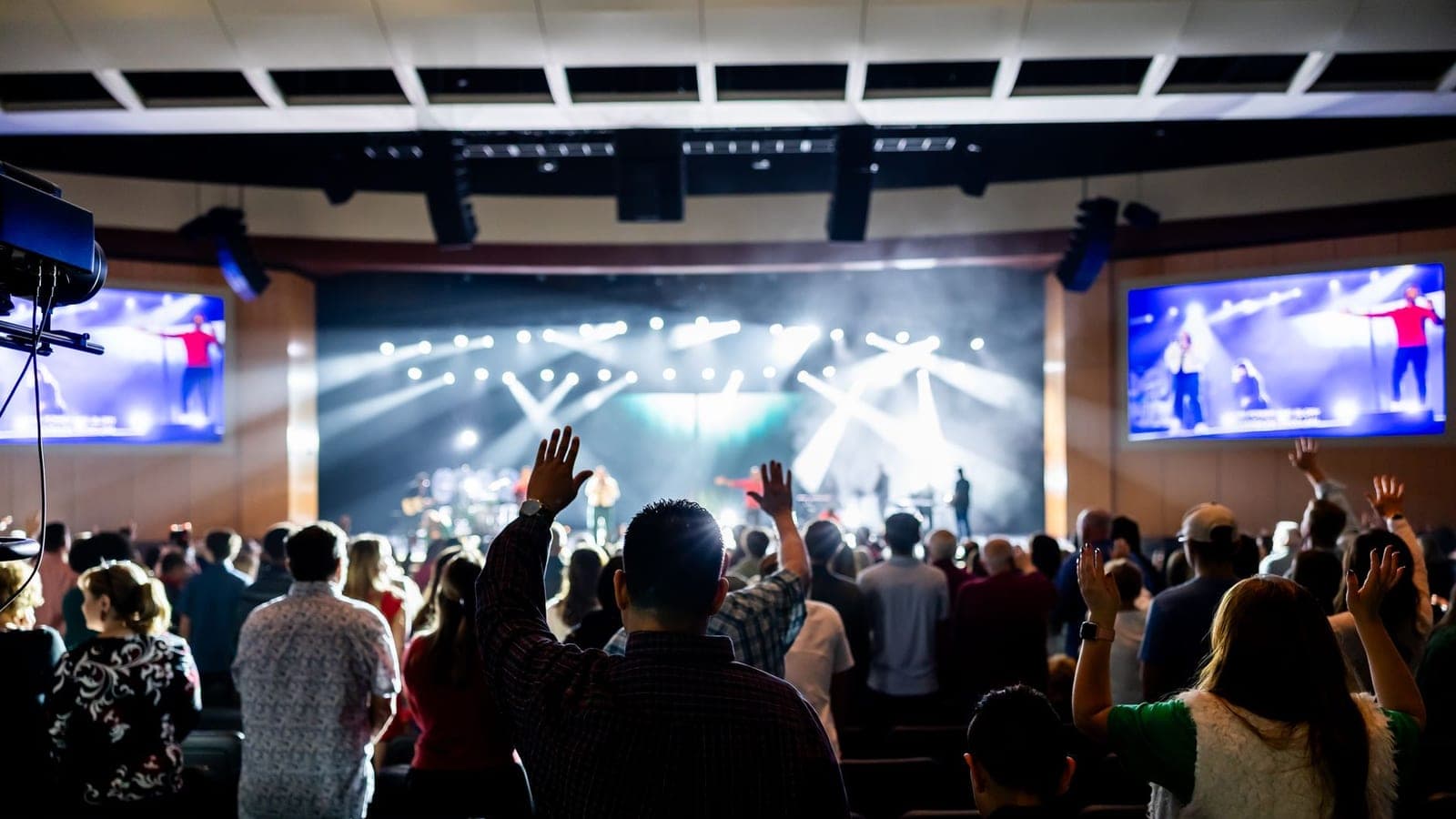
Portugal doesn't regulate the decibels your audience hears: it regulates what reaches neighbouring residents and what your crew is exposed to. For an open-air concert, the key document is the *licença especial de ruído* (special noise licence) issued by the local council, because without it the General Noise Regulation flatly bans the activity near housing at weekends and between 20:00 and 8:00. It must be requested 15 working days in advance, and both the municipality and the timetable shape what you're allowed to do.
When does an event in Portugal need a licença especial de ruído?
Whenever the event falls within the definition of an *atividade ruidosa temporária* (temporary noisy activity) and takes place during the prohibited hours or in the prohibited locations. The General Noise Regulation, approved by Decree-Law 9/2007, defines this activity in article 3(b) as one that, "não constituindo um acto isolado, tenha carácter não permanente" (not being an isolated act, is non-permanent in nature) and produces harmful or disturbing noise, "tais como obras de construção civil, competições desportivas, espectáculos, festas ou outros divertimentos, feiras e mercados" (such as building works, sporting competitions, shows, parties or other entertainment, fairs and markets). A festival, a concert in a public square or a local patron saint's festival are all named in the law itself.
The prohibition sits in article 14 and leaves no room for nuance. "É proibido o exercício de actividades ruidosas temporárias na proximidade de: a) Edifícios de habitação, aos sábados, domingos e feriados e nos dias úteis entre as 20 e as 8 horas; b) Escolas, durante o respectivo horário de funcionamento; c) Hospitais ou estabelecimentos similares" (Temporary noisy activities are prohibited near: a) residential buildings, on Saturdays, Sundays and public holidays and on working days between 20:00 and 8:00; b) schools, during their opening hours; c) hospitals or similar establishments). Read literally, that rule rules out most of a promoter's calendar: concerts happen at night and at weekends.
Article 15 is the way in. Its paragraph 1 states that carrying out these activities "pode ser autorizado, em casos excepcionais e devidamente justificados, mediante emissão de licença especial de ruído pelo respectivo município, que fixa as condições de exercício da actividade" (may be authorised, in exceptional and duly justified cases, through the issuing of a special noise licence by the relevant municipality, which sets the conditions for carrying out the activity). Two things matter here. First: the licence is exceptional by legal definition, not a routine formality. Second: it doesn't set a universal figure — it sets *conditions*, case by case.
The scope of the Regulation, in article 2(1)(f), expressly includes "Espectáculos, diversões, manifestações desportivas, feiras e mercados" (shows, entertainment, sporting events, fairs and markets). It's worth noting what the text doesn't say: the Regulation sets no decibel ceiling applicable to the concert audience, unlike the Belgian model of 85, 95 and 100 dB(A) summarised in our guide to noise limits at events in Belgium. This is our own reading of the scope of articles 1 and 2, not an interpretation published by the Portuguese Environment Agency.
Is the noise licence enough, or do you need two permits?
On public land you need two, and the second permit is the one that holds up most applications. Decree-Law 310/2002, in article 29, makes "os arraiais, romarias, bailes, provas desportivas e outros divertimentos públicos organizados nas vias, jardins e demais lugares públicos ao ar livre" (fairs, pilgrimages, dances, sporting events and other public entertainment organised on streets, gardens and other open-air public spaces) subject to a licence from the local council, with one clear exception: when the activity takes place "em recintos já licenciados pela Direcção-Geral dos Espectáculos" (in venues already licensed by the Directorate-General for Entertainment). If your event is held in an already-licensed venue, this requirement doesn't apply; if you put up a stage in a public square, it does.
The same decree-law sets a timetable that surprises anyone used to a different market. Article 30(2) states that operating "emissores, amplificadores e outros aparelhos sonoros que projectem sons para as vias e demais lugares públicos" (transmitters, amplifiers and other sound equipment projecting sound into streets and other public spaces) may only happen "entre as 9 e as 22 horas e mediante a autorização referida no artigo 32.º" (between 9:00 and 22:00, and subject to the authorisation referred to in article 32). Article 32, as amended by Decree-Law 9/2007, sets three cumulative requirements for holding noisy festivities, public entertainment and shows "nas vias públicas e demais lugares públicos" (on public streets and other public spaces) near housing, schools during school hours, hospitals or hotel establishments: that exceptional circumstances justify it, that the council president issues the licença especial de ruído, and that the limits in article 15(5) of the Regulation are respected when the licence runs for more than a month.
The deadline is also set out: article 31(1) requires these licences to be requested "com a antecedência mínima de 15 dias úteis ao presidente da câmara" (with a minimum of 15 working days' notice to the council president). This matches the deadline in the General Noise Regulation, so both applications can be prepared together. Article 32(3) adds what the licence must contain: "a referência ao seu objecto, a fixação dos respectivos limites horários e as demais condições julgadas necessárias para preservar a tranquilidade das populações" (reference to its purpose, the setting of the relevant time limits, and any other conditions deemed necessary to preserve residents' peace and quiet). That time limit is the one that then has to match the end time you advertise on the ticket and the poster. Anyone selling tickets for an event in Portugal would do well to check it alongside the rest of the formalities in our guide to selling tickets in Portugal and dealing with the IGAC.
| Procedure | Law | Who decides | Minimum notice |
|---|---|---|---|
| Licença especial de ruído | Art. 15, Decree-Law 9/2007 | Local council | 15 working days |
| Public entertainment licence for outdoor venues | Art. 29, Decree-Law 310/2002 | Local council | 15 working days (art. 31) |
| Authorisation for sound directed at public spaces | Art. 30(2), Decree-Law 310/2002 | Council president | Only between 9:00 and 22:00 |
| Immediate suspension for non-compliance | Art. 18, Decree-Law 9/2007 | Police authorities | On the spot |
What documents does the council require, and within what timeframe?
Six pieces of information, and the list is set out exhaustively in article 15(2) of the Regulation: exact location or defined route, start and end dates, timetable, "razões que justificam a realização da actividade naquele local e hora" (reasons justifying carrying out the activity at that location and time), proposed noise prevention and reduction measures, and any other relevant information. The third and fourth are the ones most often done badly: the municipality needs to be able to read why that location and that time, and what you're going to do to make it quieter.
Fifteen working days aren't fifteen days. For a festival starting on a Friday, the application needs to go in roughly three weeks beforehand in real calendar time — our own calculation based on the legal deadline, counting only working days. Several municipalities also add administrative conditions that aren't in the decree-law. Porto Municipality requires payment to be made by 17:00 on the working day before the activity. Maia Town Council gives itself a maximum of 15 working days to decide and asks for a site plan, a certidão permanente (permanent company registration certificate) for corporate applicants, and the event programme. Leiria Town Council requires, for open-air shows, the licensing permit from the junta de freguesia (parish council) and, if there's pyrotechnics, a declaration from the certified company with the firing zone and equipment.
There's one scenario where silence works in your favour. If the noise licence is requested before or at the same time as the building works permit (alvará), article 15(3) requires it to be issued "na mesma data do alvará" (on the same date as the permit), and paragraph 4 closes the loop: if it isn't issued by that date, "esta considera-se tacitamente deferida" (it is deemed tacitly granted). This is the only tacit approval in the whole regime, and it only applies to that scenario.
How much does the licença especial de ruído cost?
Whatever each municipality decides, because the fee is set locally and the decree-law doesn't fix an amount. The figures published by local councils in their service directories, checked on 15 October 2026, show big differences for the same nationwide procedure.
| Municipality | Published fee | What it covers |
|---|---|---|
| Valongo | €32.85 per day | Plus €6.15 for each hour between 23:00 and 7:00 |
| Leiria | €81.12 | Plus a €25.00 preparation fee, deducted from the final amount |
| Maia | €113.23 + €39.26 | Submitting the application and issuing the licence |
| Porto | According to the municipal fee schedule | Payment due by 17:00 on the working day before |
Two calculations of our own on those published figures. A concert in Valongo finishing at 3:00am pays the €32.85 day rate plus four night-time hours at €6.15 each: €57.45. And the full licence in Maia, adding submission and issuing together, comes to €152.49 — 4.6 times Valongo's base day rate. For a single festival's budget that's irrelevant; for a tour of twenty dates across different municipalities, it isn't.
What you should budget for is what comes after the licence: acoustic measurements. Article 34 of the Regulation requires that "os ensaios e medições acústicas necessárias à verificação do cumprimento do disposto no presente Regulamento são realizados por entidades acreditadas" (the tests and acoustic measurements needed to verify compliance with this Regulation are carried out by accredited bodies). It isn't a report your sound supplier can sign off on.
What noise limits actually apply to a concert?
The ones that protect sensitive receptors, not the attendees. Article 11 sets exposure limit values by zone classification: mixed zones must not be exposed to outdoor ambient noise above 65 dB(A) Lden or 55 dB(A) Ln, and sensitive zones, above 55 dB(A) Lden or 45 dB(A) Ln. For as long as a municipality hasn't classified its zones, paragraph 3 applies a limit to sensitive receptors of 63 dB(A) Lden and 53 dB(A) Ln. And paragraph 5 lets municipalities lower these by a further 5 dB(A) in designated areas, "designadamente em centros históricos" (particularly in historic centres).
Those indicators are long-term averages measured over a year, not a sound-level-meter reading at the mixing desk. That's why, for a one-off event, the real operative limit is something else: the conditions set in the licence. The Regulation only imposes its own figure on the licence when it's issued "por um período superior a um mês" (for a period exceeding one month); in that case, under article 15(5), it's conditional on respecting, at sensitive receptors, 60 dB(A) LAeq during the evening period and 55 dB(A) at night. For a three-day festival, that figure doesn't kick in.
The reference periods are defined in article 3(p): daytime from 7:00 to 20:00, evening from 20:00 to 23:00, and night from 23:00 to 7:00. And the discomfort criterion in article 13 — the difference between ambient noise and residual noise, which cannot exceed 5 dB(A) during the day, 4 in the evening and 3 at night — is written for *permanent* noisy activities, meaning a venue or nightclub, not a temporary event. If you're running a venue with a regular programme, add the corrections in Annex I: 3 dB(A) if the noise has tonal components, 3 more if it has impulsive components, and 6 if both apply.
Setúbal's Regulation: what your municipality can add
The decree-law is the floor; a municipal regulation can be considerably stricter. The Setúbal Municipality Environmental Noise Regulation, published as Regulation 109/2025 in the Diário da República, series 2, no. 12, of 17 January 2025, is a good example of how far that local layer can go.
Its article 22 sets a closing time for licences: for activities from Sunday to Thursday, "a sua cessação será até às 24h" (it must end by midnight); on Fridays, Saturdays and the eve of public holidays, "até às 2h" (by 2:00am). These limits "poderão ser excecionalmente autorizados para outros períodos em situações devidamente justificadas" (may exceptionally be authorised for other periods in duly justified situations). The same article makes the licence's issuing conditional "segundo a localização pretendida e a inexistência de antecedentes de reclamação" (on the intended location and the absence of a history of complaints), and adds a penalty not found in the General Regulation: breaching the article "impede o proponente da LER de realizar novo pedido durante 12 meses" (bars the applicant from submitting a new request for 12 months).
There are further layers affecting anyone programming a venue. Article 16 requires establishments operating after 23:00 with live or amplified music to soundproof the space, install a sound limiter with logging, have the acoustic assessment certified by a laboratory accredited by the Portuguese Accreditation Institute, and operate with doors and windows closed. Article 17 requires the limiter to be able to "enviar automaticamente e por via telemática para os serviços competentes da autarquia, os dados armazenados" (automatically send the stored data electronically to the relevant municipal services), and requires any fault to be reported within 48 hours and fixed within 72. On terraces, article 20 bans amplified sound unless the municipality authorises it through a licença especial de ruído.
The practical conclusion is simple: before confirming an event's end time, read that council's regulation, not just the decree-law. The same applies to door staff, where Portugal's rules on event security guards set their own requirements.
And what about the noise your crew is exposed to?
That one does have fixed figures, and they're in a separate law. Decree-Law 182/2006, published in the Diário da República of 6 September 2006, transposes Directive 2003/10/EC and sets out in article 3 three tiers of daily personal exposure: an exposure limit value of 87 dB(A) and 140 dB(C) peak, upper exposure action values of 85 dB(A) and 137 dB(C), and lower exposure action values of 80 dB(A) and 135 dB(C). This is the law that applies to sound engineers, bar staff and security.
The preamble itself acknowledges that this sector was a special case: the directive provided for "um período transitório de dois anos para a elaboração de orientações práticas que ajudem a aplicar as suas prescrições em actividades da música e do entretenimento" (a two-year transitional period for drawing up practical guidelines to help apply its provisions in music and entertainment activities). That deadline passed long ago; the obligation is now in full force.
The operational consequences are specific. Article 7 obliges the employer to make hearing protection available to workers "sempre que seja ultrapassado um dos valores de acção inferiores" (whenever one of the lower action values is exceeded), and to ensure it is actually worn "sempre que o nível de exposição ao ruído iguale ou ultrapasse os valores de acção superiores" (whenever the noise exposure level reaches or exceeds the upper action values). Article 6(4) requires these work areas to be marked and access restricted "sempre que seja tecnicamente possível e o risco de exposição o justifique" (whenever technically possible and the exposure risk justifies it). Article 11 adds health surveillance: an annual hearing check and audiometric tests for anyone exceeding the upper action values, and audiometric exams every two years for anyone exceeding the lower ones. And article 14 requires records to be kept "durante, pelo menos, 30 anos após ter terminado a exposição" (for at least 30 years after exposure has ended).
| Threshold | Daily level | What it requires |
|---|---|---|
| Lower action value | 80 dB(A) · 135 dB(C) peak | Hearing protection made available; audiometric tests every two years |
| Upper action value | 85 dB(A) · 137 dB(C) peak | Mandatory use of hearing protection; signage; annual hearing check |
| Exposure limit value | 87 dB(A) · 140 dB(C) peak | Must never be exceeded; requires immediate measures (art. 8) |
Using the daily personal exposure formula in article 2(b), one hour of work at 100 dB(A) equates to 91 dB(A) over the eight-hour reference period: the level minus the 9 dB discount for going from eight hours down to one. The calculation is ours, based on the formula in the law, and the result sits above the 87 dB(A) limit value. Under article 4(8), the measurement itself must be carried out by an accredited body or a senior health and safety technician with specific training.
What fine applies if the event plays music without a licence?
Between €2,000 and €36,000 for a company, depending on the degree of fault, plus suspension on the spot. Article 28 of the General Noise Regulation classifies three conducts as a minor environmental administrative offence: carrying out temporary noisy activities without a licença especial de ruído, carrying them out "em violação das condições da licença especial de ruído" (in breach of the special noise licence's conditions), and breaching the limits in article 15(5) when the licence runs for more than a month.
The amount is set by Law 50/2006, the framework law on environmental administrative offences. Article 22(2)(b) sets, for minor offences committed by companies, "de (euro) 2 000 a (euro) 18 000 em caso de negligência e de (euro) 6 000 a (euro) 36 000 em caso de dolo" (from €2,000 to €18,000 in cases of negligence, and from €6,000 to €36,000 in cases of intent). For individuals, it's €200 to €2,000 for negligence and €400 to €4,000 for intent. In cases of repeat offending, article 26(4) raises the minimum and maximum limits "em um terço do respectivo valor" (by a third of the respective amount). Article 28(3) of the Regulation also notes that negligence and attempted breaches are punishable.
Put in perspective: the most expensive licence checked above costs €152.49, in Maia, and the minimum fine for running an event without one, with intent, is €6,000 — nearly forty times more. The calculation is ours, using the figures published by each source.
The financial penalty isn't the costliest part. Article 18 of the Regulation provides that temporary noisy activities carried out in breach of article 14 "são suspensas por ordem das autoridades policiais, oficiosamente ou a pedido do interessado" (are suspended by order of the police authorities, either on their own initiative or at the request of an interested party), with a report then raised for the council president. Article 27 allows enforcement bodies to adopt precautionary measures that may consist of "na suspensão da actividade, no encerramento preventivo do estabelecimento ou na apreensão de equipamento" (suspending the activity, preventively closing the establishment, or seizing equipment). And article 33(2) of Decree-Law 310/2002 allows immediate suspension of shows "que não estejam licenciados ou se não contenham nos limites da respectiva licença" (that are unlicensed or fall outside the limits of their licence). A stage shut down at 23:30 with a full venue is a public order problem, not an accounting one.
Processing falls to the local council in matters of temporary noisy activities, under article 30(2) of the Regulation. In the Azores and Madeira the framework applies with adaptations: article 6 of Decree-Law 9/2007 extends the Regulation to the autonomous regions "sem prejuízo das necessárias adaptações à estrutura própria dos órgãos das respectivas administrações regionais" (without prejudice to the necessary adaptations to the specific structure of the bodies of the respective regional administrations) and assigns the proceeds of fines to the regions. The Portuguese Environment Agency confirms the framework currently in force: Decree-Law 9/2007, together with Rectification Statement 18/2007 and the amendment made by Decree-Law 278/2007.
And what part of this does Futura Tickets cover?
It's worth separating what falls on the organiser and what falls on the ticketing provider. The licença especial de ruído, the public entertainment licence, the acoustic measurements and staff hearing protection are all procedures and obligations for the organiser: no ticketing system replaces them.
What does concern the platform is consistency between the licence and what's being sold. The council sets the time limits in the licence, and that closing time has to match what's printed on the ticket, on the event page and in the access plan. Futura Tickets is a Spanish SaaS ticketing platform for professional organisers, selling in 9 languages and across 11 country domains, with attendee data kept 100% in the organiser's hands — useful when you need to warn people about a schedule change imposed by the council just a few hours beforehand. You can compare it against the rest of the ticketing software available.
Checklist before applying for the licença especial de ruído
Seven checks. None of them can be sorted the week of the event.
Check whether your schedule falls within the article 14 prohibition. Weekend, public holiday, or between 20:00 and 8:00 near housing: then the licence isn't optional.
Count back 15 working days, not 15 calendar days. That's roughly three calendar weeks. If the municipality requires advance payment, like Porto, subtract another working day.
Check whether you also need the public entertainment licence. If you're setting up on a public street, garden or square, article 29 of Decree-Law 310/2002 requires it; in an already-licensed venue, it doesn't.
Actually write the noise-reduction measures section properly. Article 15(2)(e) requires it, and it's the section that makes the difference between an application that's granted and one that's refused.
Read the municipal regulation before announcing the end time. In Setúbal, the licence closes at midnight from Sunday to Thursday, and at 2:00am on Fridays and Saturdays.
Hire an accredited body for the measurements. Article 34 of the Regulation requires it; a report from your sound supplier doesn't count as evidence.
Sort out your crew's hearing protection before build day. Above 85 dB(A) of daily exposure, wearing protection is mandatory, not optional.
Conclusion
Portugal handles event noise with a three-part structure: a general time-based ban in the General Noise Regulation, an exceptional municipal licence that lifts it and sets conditions case by case, and a separate labour regime that protects crew with fixed figures. There's no national decibel ceiling for the audience, and that pushes the whole negotiation down to municipal level: the same line-up might finish at midnight in one council area and at 2:00am in another, with fees ranging from Valongo's €32.85 a day to Maia's €152.49 for the same procedure. For a promoter booking shows in several cities, the real risk isn't the fine — it's discovering, the week of the event, that the licence arrives with a different end time from the one that's been printed on the ticket for months. It's the same literal-reading logic already seen in Portugal's entertainment law and refunds: what the law doesn't say isn't to be assumed.
Sources
- Decree-Law 9/2007, General Noise Regulation, consolidated text from the Electronic Diário da República (PDF)
- General Noise Regulation, consolidated version on the Electronic Diário da República
- Law 50/2006, framework law on environmental administrative offences, consolidated text (PDF)
- Decree-Law 310/2002, licensing of public entertainment, consolidated text (PDF)
- Decree-Law 182/2006, worker exposure to noise, Diário da República no. 172 of 6 September 2006 (PDF)
- Regulation 109/2025, Setúbal Municipality Environmental Noise Regulation, Diário da República series 2 no. 12 (PDF)
- Licença especial de ruído: fees and conditions (Valongo Municipality)
- Licença especial de ruído: cost and documents (Leiria Town Council)
- Licença especial de ruído: fees and decision deadline (Maia Town Council)
- Licença especial de ruído: deadline and payment conditions (Porto Municipality)
- Quadro legal do ruído ambiente (legal framework for environmental noise), Portuguese Environment Agency (PDF published by IGAMAOT)